Home / NFL Draft & Alumni / NFL Teams with Most Alabama Players: Mapping the Crimson Tide Pipeline Across the League
NFL Teams with Most Alabama Players: Mapping the Crimson Tide Pipeline Across the League
The transition from collegiate powerhouse to professional pipeline is a milestone few college football programs ever achieve. For the Alabama Crimson Tide, however, populating National Football League rosters has become an annual expectation rather than a sporadic achievement. Over the past two decades, the program has produced a staggering volume of professional talent, turning Sundays…


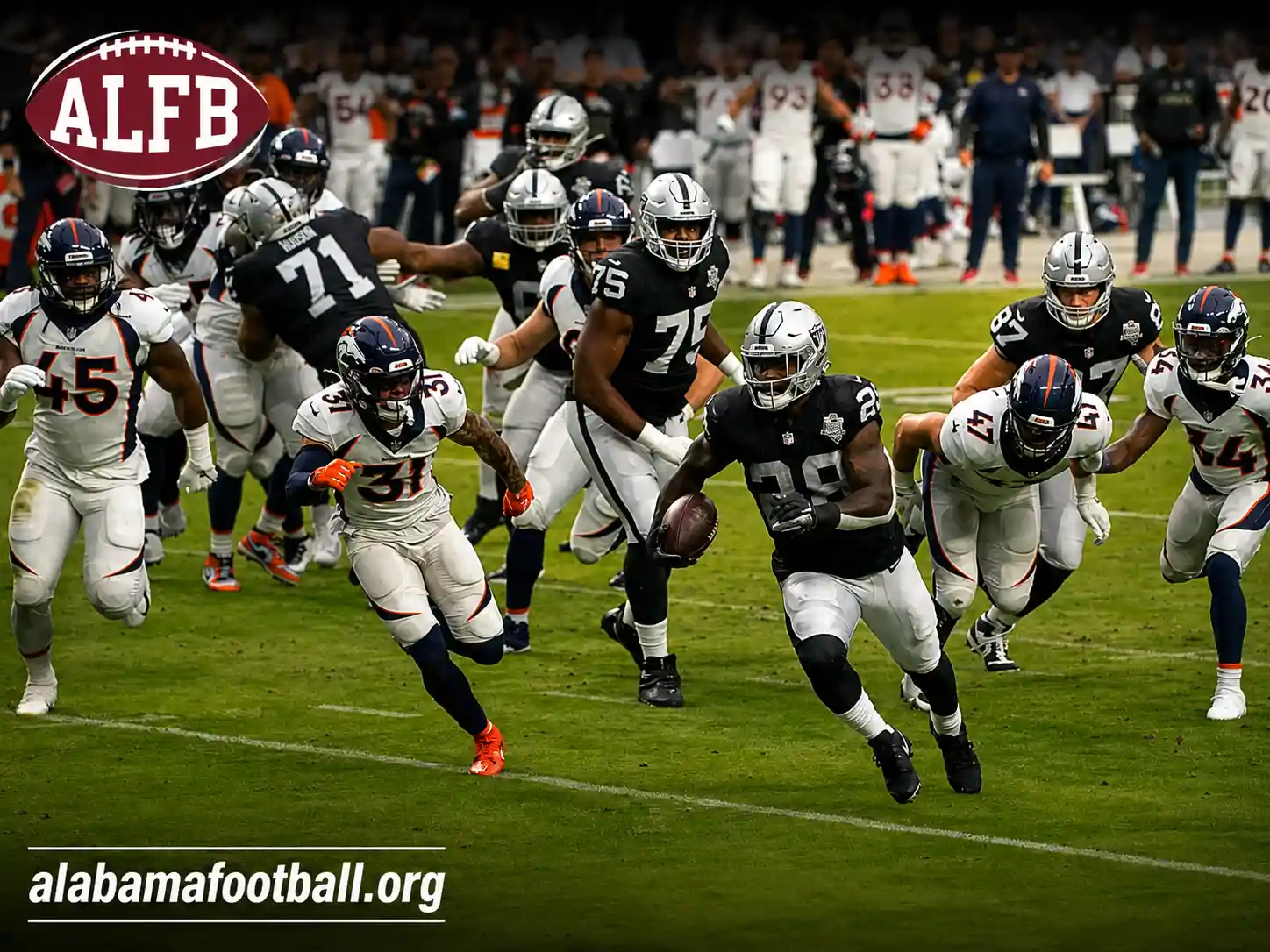
The transition from collegiate powerhouse to professional pipeline is a milestone few college football programs ever achieve. For the Alabama Crimson Tide, however, populating National Football League rosters has become an annual expectation rather than a sporadic achievement. Over the past two decades, the program has produced a staggering volume of professional talent, turning Sundays into a weekly showcase of former Tuscaloosa stars.
When tracking the NFL teams with most Alabama players, a fascinating trend emerges. Front offices across the league do not merely draft Alabama prospects by chance. Instead, general managers actively build entire positional groups around Crimson Tide alumni, seeking the tactical maturity, physical durability, and big-game composure that have become synonymous with the program.
From the Philadelphia Eagles’ heavy investment in offensive skill and trench anchors to the Houston Texans’ defense built by a former Alabama linebacker, specific franchises have established dedicated pipelines. This comprehensive analysis breaks down which NFL franchises carry the highest concentration of Crimson Tide talent, how these players shape team identities, and why front offices continue to rely on Alabama to build championship-caliber rosters.
Quick Facts: Alabama Football’s NFL Footprint
To understand the scope of Alabama’s influence across professional football, the table below highlights the program’s NFL representation metrics and top franchise destinations.
| Metric / Category | Statistic / Detail |
|---|---|
| Total Active NFL Players (Avg. Per Season) | 60–70 Players (League-Leading) |
| Franchise with Highest Concentration | Philadelphia Eagles |
| Secondary Hubs | Houston Texans, Detroit Lions, Baltimore Ravens |
| Position with Most NFL Starters | Offensive Line & Defensive Backfield |
| First-Round Draft Picks (2009–2024) | 44 Players |
| Active Pro Bowlers (Former Tide) | 15+ Players Across AFC and NFC |
| Head Coaches Executing Pipeline Strategy | DeMeco Ryans (Texans), Nick Sirianni (Eagles), Dan Campbell (Lions) |
The Philadelphia Eagles: The Premier Crimson Tide Hub
When media members and fans refer to the Philadelphia Eagles as “Alabama North” or “Bama East,” they are hardly exaggerating. General Manager Howie Roseman has aggressively targeted Crimson Tide talent at the top of the NFL Draft, assembling a core group of starters who previously shared the locker room in Tuscaloosa.
The Offensive Trinity: Hurts, Smith, and Dickerson
At the heart of Philadelphia’s offensive identity sits a trio of former Alabama superstars. Franchise quarterback Jalen Hurts, who played three seasons in Tuscaloosa before finishing his collegiate career at Oklahoma, maintains deep ties to the Crimson Tide program and its culture of accountability.
Beside him is Heisman Trophy winner DeVonta Smith. Standing as one of the most route-polished wide receivers in professional football, Smith provides the Eagles with a lethal perimeter threat capable of winning against press-man coverage.
Anchoring the interior offensive line is Pro Bowl guard Landon Dickerson. Known for his devastating power in gap-scheme run concepts, Dickerson brings the exact physical edge that Nick Saban demanded from his offensive fronts.
Trench Depth and Defensive Additions
The Eagles’ reliance on Alabama talent extends beyond their headlining stars. Offensive lineman Tyler Steen provides valuable versatility at guard and tackle, while interior defensive lineman Byron Young adds physical depth to the defensive line rotation.
Furthermore, depth pieces like cornerback Eli Ricks and tight end Cameron Latu show how Philadelphia uses the lower end of its roster to maintain cultural alignment. The shared collegiate background creates immediate chemistry, allowing the Eagles to execute complex pre-snap adjustments without communication breakdowns.
The Houston Texans: DeMeco Ryans and the Defensive Blueprint
The connection between the Houston Texans and the University of Alabama is anchored by head coach DeMeco Ryans. A former All-American linebacker for the Crimson Tide in the mid-2000s, Ryans understands firsthand the mental and physical standards required to excel in Tuscaloosa.
Will Anderson Jr. and the Front Seven
When Houston selected pass rusher Will Anderson Jr. third overall in the 2023 NFL Draft, they secured the cornerstone of their defense. Anderson brought elite edge-setting capability and a relentless motor to Houston, earning NFL Defensive Rookie of the Year honors and setting the physical tone for Ryans’ unit.
Beside Anderson, linebackers Christian Harris and Henry To’oTo’o form a fast, sideline-to-sideline middle tier. Both players excel in pass coverage and lateral pursuit, traits cultivated during their time executing complex pattern-match coverages at Alabama.
Offensive Complement: John Metchie III
On the offensive side of the ball, receiver John Metchie III provides Houston with a smooth route runner in intermediate passing concepts. Metchie’s ability to win against slot coverage gives the Texans a dependable target on third downs, complementing their perimeter vertical threats.
The Detroit Lions: High-Impact Game-Changers in Motown
Under General Manager Brad Holmes and head coach Dan Campbell, the Detroit Lions built an elite contender around physical toughness and relentless effort. To achieve that culture, Motown turned heavily to the Crimson Tide.
The Explosive Backfield and Perimeter
Running back Jahmyr Gibbs transformed Detroit’s offense upon his arrival. His combination of contact balance, vision, and pass-catching ability out of the backfield makes him an ideal fit for modern, position-less offensive schemes.
Paired with Gibbs is wide receiver Jameson Williams, whose world-class speed forces opposing safeties to back off the line of scrimmage, opening up passing lanes for the rest of the offense.
Secondary Dominance: Branch and Arnold
Defensively, Detroit invested heavily in Alabama’s defensive backfield. Defensive back Brian Branch emerged immediately as one of the league’s premier nickel defenders, demonstrating elite tackling ability in the run game and instincts in coverage.
Joining Branch is cornerback Terrion Arnold, bringing boundary physicality and competitive swagger. Together, they give the Lions an aggressive, high-IQ secondary capable of playing heavy press coverage.
The Baltimore Ravens: Defensive Tradition and Rushing Dominance
The Baltimore Ravens’ affinity for Alabama talent is rooted in franchise history. Former General Manager Ozzie Newsome, an Alabama Hall of Famer himself, built Baltimore’s championship culture on physical defense and trench control. Current GM Eric DeCosta has seamlessly continued that tradition.
Defensive Anchors: Humphrey and the Secondary
All-Pro cornerback Marlon Humphrey represents the gold standard of Baltimore’s secondary. Known for his “punch-out” forced fumbles and boundary coverage skills, Humphrey routinely shadows opponents’ top wide receivers.
Beside him, secondary depth pieces like Jalyn Armour-Davis give Baltimore necessary insurance against the high-volume passing attacks of the AFC.
The Backfield Force: Derrick Henry
The acquisition of powerhouse running back Derrick Henry reinforced Baltimore’s commitment to physical football. The former Heisman Trophy winner brings a rare combination of size and breakaway speed to the Ravens’ backfield, forcing opposing defenses to commit extra defenders to the box.
The Washington Commanders: Front-Seven Physicality
The Washington Commanders have consistently turned to Tuscaloosa to build a dominant, physical interior line.
Daron Payne and Jonathan Allen
For years, the interior of Washington’s defensive line was anchored by the duo of Daron Payne and Jonathan Allen. Both players excel at eating up double teams, collapsing the pocket from the interior, and stopping the run. Their ability to dominate one-on-one matchups at the line of scrimmage frees up linebackers to shoot gaps cleanly.
Backfield Relentlessness: Brian Robinson Jr.
In the backfield, running back Brian Robinson Jr. provides Washington with a punishing running style. Known for gaining yards after contact and setting a physical tone in the second half, Robinson fits the mold of classic SEC downhill runners.
Other Franchises Heavy on Crimson Tide Alumni
Beyond the primary hubs, several other NFL franchises maintain significant concentrations of Alabama players to shore up specific positional groups.
Green Bay Packers
The Green Bay Packers made major free-agency splash moves by signing running back Josh Jacobs and safety Xavier McKinney. Jacobs provides Green Bay with a high-volume feature back who excels in forced missed tackles, while McKinney anchors the safety position with elite ball skills and deep-third coverage range.
Pittsburgh Steelers
Pittsburgh’s defensive identity centers around All-Pro safety Minkah Fitzpatrick. Acquired via trade early in his career, Fitzpatrick serves as the quarterback of the Steelers’ secondary, utilizing his pre-snap reading ability to eliminate deep passing threats. On offense, physical running back Najee Harris handles heavy workload duties inside the tackle box.
Minnesota Vikings
The Minnesota Vikings feature an intriguing mix of specialized Alabama talent, including edge rusher Dallas Turner, veteran offensive tackle Cam Robinson, and reliable placekicker Will Reichard, who finished his collegiate career as the NCAA’s all-time leading scorer.
Historical Context: The Evolution of Alabama’s NFL Pipeline
The abundance of Alabama players on NFL rosters is the result of a deliberate, multi-decade structural evolution.
During the era of Paul “Bear” Bryant, Alabama produced tough, disciplined players who dominated in traditional option and power schemes. Under Gene Stallings in the 1990s, the focus shifted toward hard-hitting defensive backs and physical running backs like Shaun Alexander.
However, the pipeline expanded dramatically under Nick Saban from 2007 to 2023. Saban implemented an NFL-style operational framework in Tuscaloosa, utilizing pro-style offensive systems and complex pattern-match defensive coverages. As a result, Alabama players entered the league with an advanced understanding of NFL terminology and expectations, vastly reducing their learning curve as rookies.
Roster Comparison: Top NFL Franchises by Alabama Concentration
To easily compare how different NFL front offices utilize Crimson Tide talent, the table below breaks down the key Alabama players across the top five franchise hubs.
| NFL Franchise | Head Coach | Key Alabama Starters | Primary Tactical Impact |
|---|---|---|---|
| Philadelphia Eagles | Nick Sirianni | Jalen Hurts, DeVonta Smith, Landon Dickerson | RPO execution, perimeter route-running, interior run power |
| Houston Texans | DeMeco Ryans | Will Anderson Jr., Christian Harris, Henry To’oTo’o | High-speed lateral pursuit, edge rush disruption |
| Detroit Lions | Dan Campbell | Jahmyr Gibbs, Jameson Williams, Brian Branch, Terrion Arnold | Explosive skill plays, physical nickel/boundary coverage |
| Baltimore Ravens | John Harbaugh | Derrick Henry, Marlon Humphrey | Heavy power rushing attack, turnover-generating secondary |
| Washington Commanders | Dan Quinn | Daron Payne, Brian Robinson Jr. | Interior line collapse, physical downhill rushing |
Expert Analysis: Tactical Advantages and Draft Risks
Evaluating why front offices repeatedly target Alabama players requires looking at both schematic compatibility and potential long-term risks.
Strengths of Crimson Tide Alumni
- Pro-Style Playbook Mastery: Former Alabama players enter the league having already executed complex concepts. Offensively, they understand pass-protection calls, pre-snap motion adjustments, and route conversions. Defensively, they are comfortable with complex coverage disguise schemes.
- Physical Durability and Conditioning: Under top-tier sports performance programs in college, players develop high-threshold strength and conditioning, making them resilient over a grueling 17-game NFL schedule.
- Big-Game Temperament: Playing in front of 100,000 fans at Bryant-Denny Stadium and competing annually in SEC Championships and College Football Playoff games eliminates stage fright at the professional level.
Potential Risks for NFL Front Offices
- Heavy Collegiate Wear-and-Tear: Because Alabama routinely plays 14 to 15 games per season in the physical SEC, high-volume contributors—particularly running backs and linebackers—enter the NFL with significant miles on their bodies.
- High Financial Cost: Because Alabama players are frequently selected in the first and second rounds, securing them requires substantial draft capital and premium rookie contracts.
Conclusion
The list of NFL teams with most Alabama players is more than just a trivia stat; it is a map of how modern professional football rosters are constructed. Franchises like the Philadelphia Eagles, Houston Texans, Detroit Lions, and Baltimore Ravens have actively used Tuscaloosa as an extension of their scouting departments, bringing in players who possess the physical tools and mental discipline to win immediately.
As these alumni continue to earn Pro Bowl selections, sign major contract extensions, and hoist Lombardi Trophies, the Crimson Tide pipeline remains the most reliable talent generator in American sports. For NFL general managers seeking proven winners, the road to a championship still runs directly through Alabama.
Frequently Asked Questions (FAQs)
Which NFL team currently has the most Alabama players on its roster?
The Philadelphia Eagles routinely carry the highest concentration of former Alabama players on their active roster and practice squad, including stars like Jalen Hurts, DeVonta Smith, and Landon Dickerson.
Why do so many NFL teams prefer drafting players from Alabama?
NFL general managers favor Alabama prospects because they are developed in a pro-style system. They possess advanced football IQ, high physical conditioning, and extensive experience playing in high-pressure games.
Has any NFL team ever started an all-Alabama backfield?
While teams like the Philadelphia Eagles have featured Jalen Hurts at quarterback alongside Alabama offensive linemen and receivers, a purely all-Alabama backfield (QB, RB, FB) on every snap remains rare due to rotational usage.
Which position group from Alabama produces the most NFL starters?
Defensive backs (cornerbacks and safeties) and offensive linemen represent the highest volume of long-term NFL starters originating from Tuscaloosa.
How many former Alabama players are currently active in the NFL?
In any given season, between 60 and 70 former Crimson Tide players occupy spots on active 53-man rosters, reserve lists, or practice squads across the 32 NFL franchises.

Nick Serpa is a contributor at Alabama Football, where he covers the latest news, game analysis, recruiting updates, player stories,
-
- National Football League (NFL) Official Site: NFL Active Player Rosters by College
-
- Pro-Football-Reference: Alabama Crimson Tide NFL Alumni Search and Roster Database
-
- Alabama Athletics Official Website (RollTide.com): Crimson Tide in the NFL
-
- ESPN NFL Coverage: How the Eagles and Texans Built Rosters Around SEC Talent
Related articles
Auburn Recruiting History: How the Tigers Built a Winner
Alabama Pro Bowl Players: History, Position Analysis, and NFL Impact
Alabama Defensive Legends: Complete History, Stats, and Era Profiles
Alabama’s Bray Hubbard Shuts Down White Helmet Rumor
Alabama Wide Receivers in NFL: Complete Player Guide, Draft History, and Career Stats