Auburn Recruiting History: How the Tigers Built a Winner
Auburn’s recruiting story doesn’t move in a straight line. It runs through an NCAA probation that gutted a roster in the early 1990s, a Heisman-winning quarterback whose signing triggered a 13-month federal and NCAA inquiry, and a coaching carousel that has cycled through five head coaches since 2020. Yet through all of it, Auburn has…


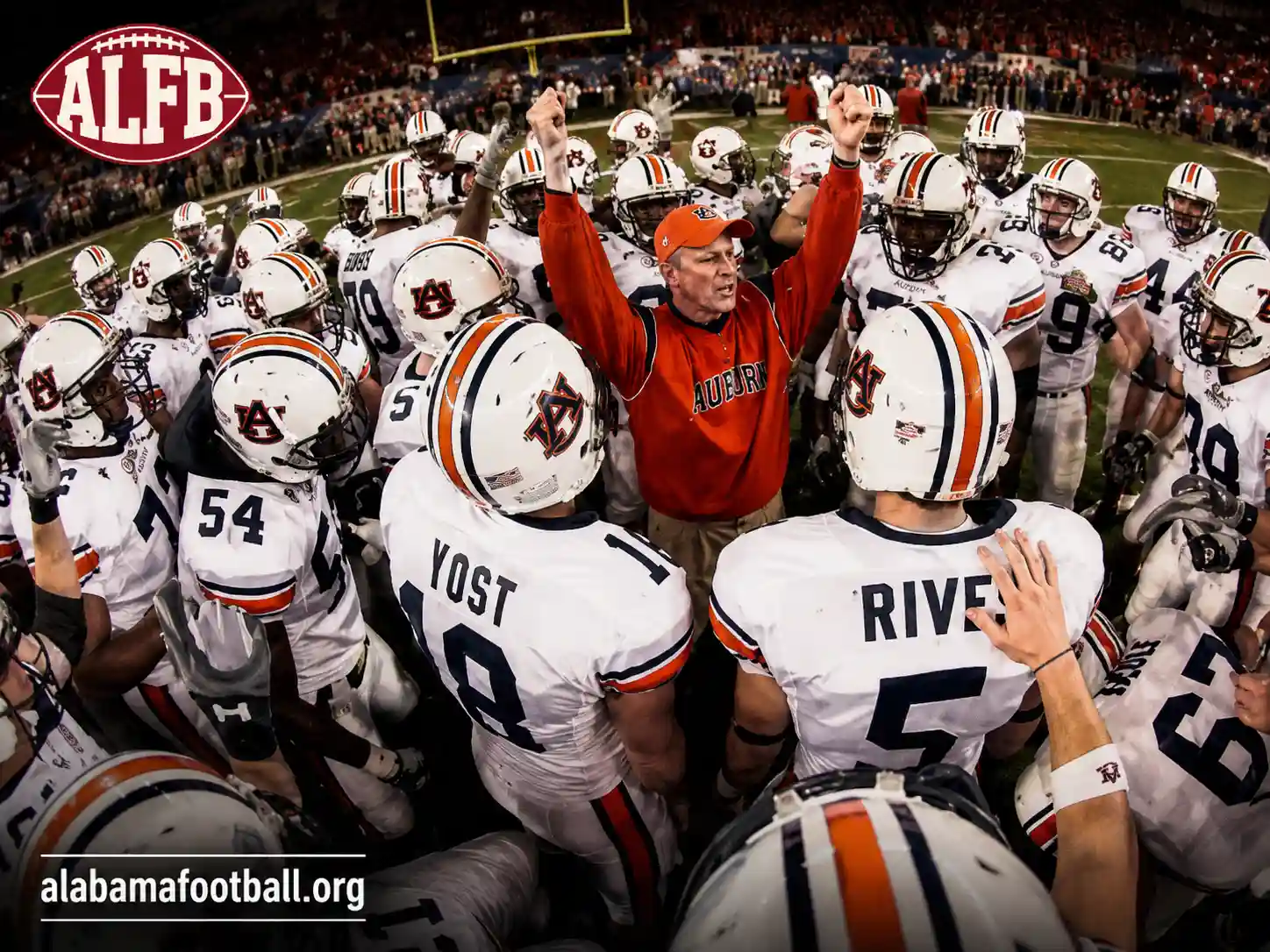
Auburn’s recruiting story doesn’t move in a straight line. It runs through an NCAA probation that gutted a roster in the early 1990s, a Heisman-winning quarterback whose signing triggered a 13-month federal and NCAA inquiry, and a coaching carousel that has cycled through five head coaches since 2020. Yet through all of it, Auburn has stayed within driving distance of the sport’s best rosters, pulling from a talent-rich footprint that includes Alabama, Georgia, and Florida.
Understanding Auburn recruiting history means understanding why the program keeps landing near the top of the class rankings even when the win column doesn’t cooperate. The Tigers have gone through five head coaches since Gus Malzahn’s departure in 2020, and each new staff has had to rebuild trust with high school prospects while competing against in-state rival Alabama and neighboring powers Georgia and LSU for the same players.
New head coach Alex Golesh, hired away from South Florida in late November 2025, is the latest to inherit that challenge—and early results on the 2027 recruiting trail suggest he’s already making progress.
The Foundation: Pat Dye and the Rise of a Power Program
Auburn’s modern recruiting identity traces back to Pat Dye, who took over the program in 1981 and built it into a consistent SEC contender over the next decade. Dye, a College Football Hall of Fame inductee, had played at Georgia and spent nine seasons as a defensive assistant under Bear Bryant at Alabama before landing the Auburn job—background that gave him a feel for recruiting battles on both sides of the Georgia-Alabama border.
Dye’s tenure ended abruptly after the 1992 season, when a former Auburn defensive back named Eric Ramsey released secretly recorded tapes documenting illegal payments from boosters and coaches. The NCAA’s investigation, which also touched Auburn’s basketball and tennis programs, found six major violations and a lack of institutional control.
In August 1993, the NCAA handed Auburn two years of probation, banned the football team from bowl games and the SEC Championship for two seasons, imposed a one-year television blackout and cut scholarship numbers from 25 to 24 annually through 1996.
The penalty didn’t stop Auburn from playing well immediately — Terry Bowden’s first team went 11-0 in 1993 — but scholarship reductions of that scale inevitably squeeze a recruiting class years down the road, thinning depth even after the sanctions expire.
Coaching Changes and Their Recruiting Fingerprints
Every coaching change at Auburn has come with a corresponding shift in recruiting strategy, geography, and results. The table below traces the head coaches since Dye and their overall records, with the context of the recruiting cycles that produced them.
| Head Coach | Tenure | Overall Record | Notable Recruiting Note |
|---|---|---|---|
| Terry Bowden | 1993–1998 | 47-17-1 | Resigned mid-1998 season amid a slide following probation-era rebuilding |
| Bill Oliver (interim) | 1998 | 2-3 | Bridged the gap before Tuberville’s hire |
| Tommy Tuberville | 1999–2008 | 85-40 | Signed classes that regularly ranked in the SEC’s middle tier, including a No. 10 national class in 2007 |
| Gene Chizik | 2009–2012 | 33-19 | Landed the 2010 class, tied for the program’s highest 247Sports Composite ranking (No. 6) behind Cam Newton’s arrival |
| Gus Malzahn | 2013–2020 | 68-35 | Presided over five straight top-10 classes, capped by a No. 9 national ranking in 2017 |
| Bryan Harsin | 2021–2022 | 9-12 | The 2022 class finished 21st nationally as Bo Nix and Tank Bigsby exit, straining roster continuity. |
| Carnell “Cadillac” Williams (interim) | 2022 | 2-2 | Held the program together during the coaching search |
| Hugh Freeze | 2023–2025 | 9-13 (fired during 2025 season) | Signed a No. 7 nationally ranked 2024 class headlined by five-star Cam Coleman |
| DJ Durkin (interim) | 2025 | — | Finished the 2025 season after Freeze’s firing |
| Alex Golesh | 2025–present | — | Hired Nov. 30, 2025; the 2027 class ranked No. 8 nationally as of late June 2026. |
Coaching records source: SEC Rant and Saturday Down South compilations of Auburn head coaching records, cross-referenced with 247Sports Composite class rankings.
Tuberville’s 11-year run established Auburn as a program that could recruit at a mid-to-high SEC level without national blue-blood status. Chizik’s brief tenure produced one of the most talked-about signings in program history and a national championship, but the classes around it were far less decorated — Auburn ranked outside the top 20 in several Chizik-era cycles even as the 2010 group delivered a title. Malzahn’s staff built the most sustained recruiting run of the last two decades, stacking top-10 classes from the mid-2010s through 2017.
The Cam Newton Signing and Its Aftermath
No single recruitment in Auburn history drew more national scrutiny than Cam Newton’s in the 2010 cycle. Newton, a junior-college transfer quarterback, signed with Auburn under Chizik and his top recruiters, offensive coordinator Gus Malzahn and running backs coach Curtis Luper. He went on to throw and run for 51 total touchdowns, win the Heisman Trophy, and lead Auburn to the 2010 BCS national championship.
Midway through that season, reports surfaced that Newton’s father, Cecil Newton, had worked with a middleman to solicit a payment reportedly between $120,000 and $180,000 from Mississippi State in exchange for his son’s signature during his recruitment out of junior college. The NCAA opened a formal investigation in October 2009 that stretched into the following year, pulling phone and bank records connected to both the Newton family and Auburn’s coaching staff.
Auburn briefly and quietly ruled Newton ineligible, as required once a violation is identified, then sought his reinstatement. The NCAA granted it within a day, finding no evidence that Newton or Auburn’s staff knew about the solicitation attempt.
After a 13-month probe, the NCAA closed its investigation in October 2011 without finding any major violations tied to Auburn or Newton, though it did conclude that Cecil Newton had broken amateurism rules on his own. The episode remains a reference point anytime recruiting compliance comes up in discussions of Auburn’s history, even though the school and player were ultimately cleared.
Recruiting Geography: Why the 250-Mile Radius Matters
Auburn’s on-campus location, roughly equidistant from Birmingham, Atlanta, and the Florida Panhandle, has always shaped its recruiting board. The state of Alabama alone produces a steady stream of SEC-caliber prospects, and Auburn has historically had to split that talent with Alabama’s program in Tuscaloosa. Georgia and the Florida panhandle add a second and third layer to the pipeline, with Louisiana and Mississippi rounding out the Tigers’ core footprint in most cycles.
Golesh made that geography explicit on his first day on the job, telling reporters at his introductory press conference that Auburn would “recruit this 250-mile radius harder than anyone in the country.” Early results back up the intent: by June 2026, Auburn’s 2027 class included a top-five-ranked prospect in five separate states—Alabama, Georgia, Illinois, Missouri, and Delaware—a sign the staff is mixing traditional in-region targets with a broader national search.
Recent Recruiting Cycles: Freeze, the Transfer Portal and Golesh’s Arrival
Hugh Freeze arrived at Auburn in December 2022 after building Liberty into a four-time bowl team, and his staff’s recruiting hit its high point with the 2024 class. Boosted by five-star Alabama linebacker Demarcus Riddick and five-star wide receiver Cam Coleman, the class finished at No. 7 nationally in both the 247Sports Composite and On3 rankings, and No. 8 according to Rivals — the highest full-cycle ranking Auburn had posted in years.
The class carried one of the highest average per-player ratings in the country, trailing only Ohio State, Georgia, Alabama, and USC by that measure, even though its overall volume of commitments kept it outside the very top of the rankings.
Freeze’s tenure also unfolded during college football’s transfer portal era, which reshaped how much a single high school class actually determines a roster. Quarterback Bo Nix, part of Harsin’s first recruiting class, left for Oregon after the 2021 season and went on to become a first-round NFL draft pick; running back Tank Bigsby was also reported by CBS Sports to have explored the transfer portal that same cycle, illustrating how quickly a highly regarded recruiting class can turn over once players gain more freedom to change schools.
Auburn fired Freeze during the 2025 season, and DJ Durkin coached the final three games as interim head coach before the school hired South Florida’s Alex Golesh on Nov. 30, 2025, to a six-year contract. Golesh had built a reputation as a strong recruiter at multiple stops — his staff signed the top-rated class in the American Athletic Conference in both 2024 and 2025 at USF, and he had previously helped secure the four highest-ranked classes in Iowa State history as that program’s recruiting coordinator.
The coaching change came with an immediate cost. Within 24 hours of Golesh’s hire, Auburn lost three 2026 commitments, including five-star safety Bralan Womack, who flipped to Mississippi State, and four-star quarterback Peyton Falzone. That kind of attrition is typical after a coaching change mid-cycle, since prospects often commit to a specific staff as much as to a university.
By the following recruiting cycle, though, Auburn’s 2027 class had climbed to No. 8 nationally in the 247Sports Composite rankings, with 24 commitments, including 12 four-star prospects. That put the Tigers fourth in the SEC, behind only Texas A&M, Oklahoma, and Florida, as of late June 2026.
Featured Snippet: What Is Auburn’s Highest-Ranked Recruiting Class?
According to 247Sports Composite historical rankings, Auburn’s 2010 and 2014 classes are tied as the program’s highest-ranked classes of the 247Sports recruiting-database era, both finishing sixth nationally. The 2010 class included quarterback Cam Newton, while the 2017 class under Malzahn ranked ninth nationally, part of a run of five consecutive top-10 classes.
Featured Snippet: Has Auburn Won a National Championship With a Recruiting-Built Roster?
Yes. Auburn won the 2010 BCS national championship under Gene Chizik, powered by a roster built partly through the 2010 signing class and partly through the transfer addition of Cam Newton. Auburn has also won national titles in 1957 and claims a share of others from earlier eras before the modern recruiting infrastructure existed.
Position Groups and Recruiting Priorities Under Golesh
Golesh’s staff, which includes several assistants he brought from South Florida, has emphasized the offensive and defensive lines early in his tenure—a common approach for coaches who inherited a roster mid-cycle and need immediate depth up front.
The 2027 class through June 2026 included commitments at offensive tackle, defensive line, and edge rusher among its most numerous position groups, alongside a running back class headlined by Myson Johnson-Cook, the group’s highest-rated pledge at the time.
That approach echoes what worked for Freeze’s staff in 2024, when defensive line coach Charlie Garrett—a strong recruiter in his own right—helped secure top-100 prospects, including Keldric Faulk, Amaris Williams, and Jamonta Waller. Auburn’s ability to keep signing defensive front prospects at a high level has been one of the more consistent threads across coaching changes, even as the rest of the roster-building strategy has shifted.
The Takeaway
Auburn’s recruiting history is less a straight climb than a series of peaks tied directly to specific coaching staffs — Dye’s build-up, Chizik’s Newton-fueled title run, Malzahn’s five-year top-10 streak, and now Golesh’s early push into the 2027 cycle. What’s stayed constant is the geography: Auburn wins when it recruits Alabama, Georgia and the Gulf South hard, and it struggles when that pipeline dries up or a coaching change disrupts continuity. Golesh’s early emphasis on the “250-mile radius” suggests his staff understands that history well, even if it’s still too early to know whether the results will match the program’s best eras.
FAQ: Auburn Recruiting History
How many head coaches has Auburn had?
Auburn Athletics recognizes Alex Golesh, hired in November 2025, as the program’s 33rd head coach, a number that includes several interim coaches across the program’s history dating to 1892.
What was Auburn’s best recruiting class of the 2010s?
The 2017 class, Auburn’s fifth consecutive top-10 class under Gus Malzahn, finished ninth nationally in the 247Sports Composite rankings.
Did the NCAA ever punish Auburn over Cam Newton’s recruitment?
No. After a 13-month investigation, the NCAA concluded in October 2011 that it could not substantiate major violations by Auburn or Newton, though it found his father had violated amateurism rules independently.
Why was Auburn banned from bowl games in the 1990s?
The NCAA placed Auburn on two years of probation in August 1993 after former player Eric Ramsey’s recorded tapes revealed illegal cash payments from boosters during Pat Dye’s tenure, resulting in a postseason ban, a television blackout, and reduced scholarships.
Who is Auburn’s current head coach?
Alex Golesh, hired from South Florida on Nov. 30, 2025, on a six-year contract, following Hugh Freeze’s in-season firing and DJ Durkin’s stint as interim coach.

Nick Serpa is a contributor at Alabama Football, where he covers the latest news, game analysis, recruiting updates, player stories,
- “Auburn Coaching History“—Saturday Down South
- “Auburn head coaches since Pat Dye and their records,” —SEC Rant
- “Ranking Auburn’s football recruiting classes in this century”—247Sports
- “Auburn releases Cam Newton docs”—ESPN
- “NCAA HANDS AUBURN 2-YEAR PROBATION, BUT NOT ‘DEATH PENALTY,’”—The Washington Post
Related articles
Auburn Recruiting History: How the Tigers Built a Winner
Alabama Pro Bowl Players: History, Position Analysis, and NFL Impact
Alabama Defensive Legends: Complete History, Stats, and Era Profiles
Alabama’s Bray Hubbard Shuts Down White Helmet Rumor
Alabama Wide Receivers in NFL: Complete Player Guide, Draft History, and Career Stats