Alabama Defensive Legends: Complete History, Stats, and Era Profiles
The University of Alabama established its college football reputation on defensive dominance. Across decades of changing offensive trends, Crimson Tide teams relied on physical defensive fronts, disciplined linebacker play, and turnover-creating secondaries. This defensive focus yielded 18 national championships and produced dozens of consensus All-Americans, national award winners, and first-round NFL draft selections. Understanding the…


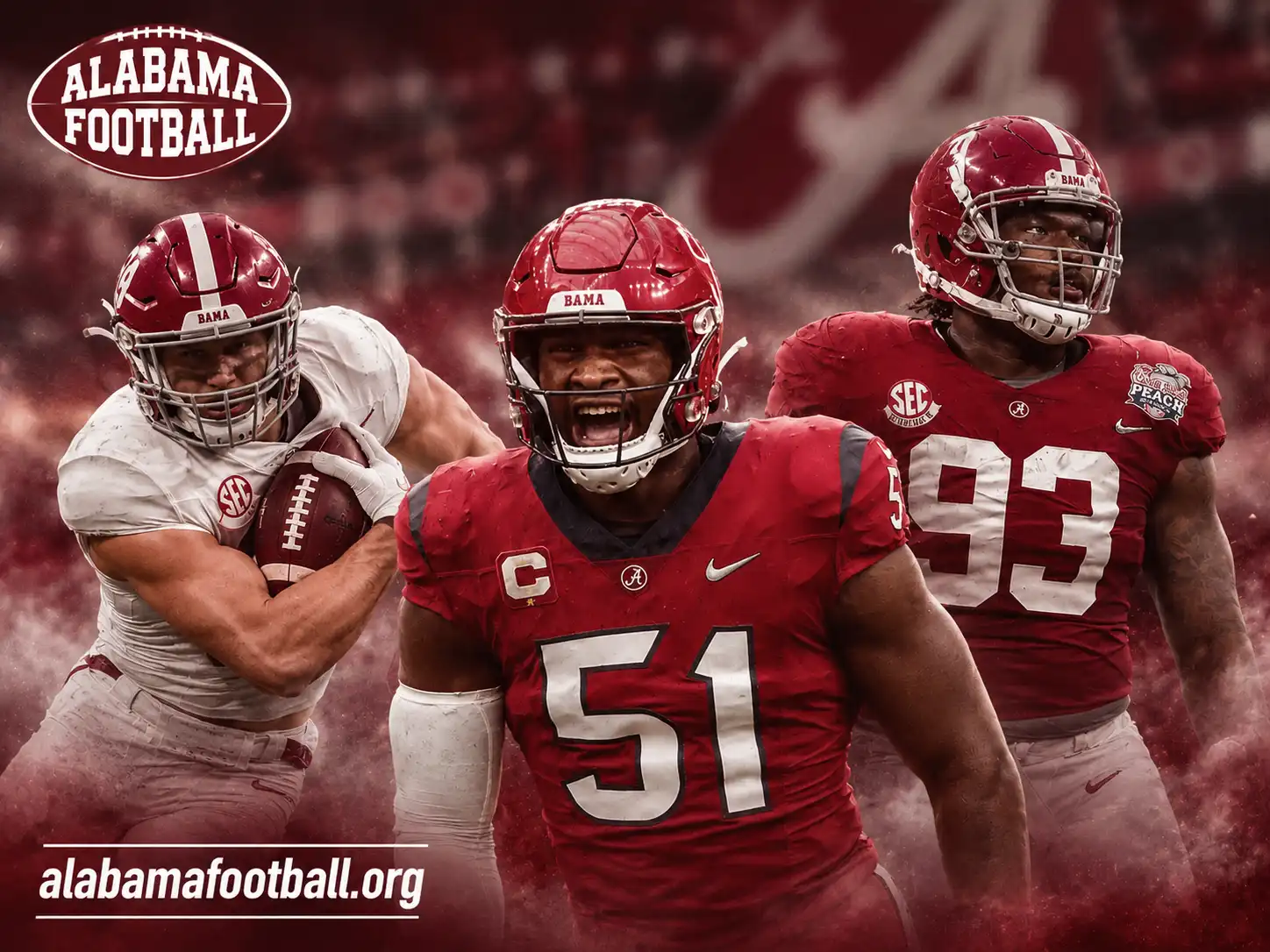
The University of Alabama established its college football reputation on defensive dominance. Across decades of changing offensive trends, Crimson Tide teams relied on physical defensive fronts, disciplined linebacker play, and turnover-creating secondaries. This defensive focus yielded 18 national championships and produced dozens of consensus All-Americans, national award winners, and first-round NFL draft selections.
Understanding the tradition of Alabama defensive legends requires examining three distinct coaching eras. Paul “Bear” Bryant instituted a culture of physical toughness and option-erasing gap discipline. Gene Stallings built aggressive, man-coverage defenses capable of neutralizing high-powered passing attacks. Nick Saban modernized the defense into a pro-style system, blending multi-front 3-4 looks with complex pattern-matching coverages.
This article details the historical evolution, individual achievements, career statistics, and tactical philosophy behind the greatest defensive players in Alabama football history.
Quick Facts: Alabama Crimson Tide Defensive History
The table below outlines core program metrics and defensive award achievements in Crimson Tide history.
| Program Metric | Program Detail / Historical Record |
| Team Name | Alabama Crimson Tide |
| Conference | Southeastern Conference (SEC) |
| Home Stadium | Bryant-Denny Stadium (Tuscaloosa, AL) |
| Claimed National Championships | 18 |
| Chuck Bednarik Award Winners | 3 (Jonathan Allen 2016, Minkah Fitzpatrick 2017, Will Anderson Jr. 2022) |
| Bronko Nagurski Trophy Winners | 3 (Jonathan Allen 2016, Will Anderson Jr. 2021, 2022) |
| Dick Butkus Award Winners | 3 (Derrick Thomas 1988, Rolando McClain 2009, C.J. Mosley 2013) |
| Vince Lombardi Award Winners | 3 (Cornelius Bennett 1986, Jonathan Allen 2016, Will Anderson Jr. 2022) |
| Jim Thorpe Award Winners | 2 (Antonio Langham 1993, Minkah Fitzpatrick 2017) |
| All-Time Career Sack Leader | Derrick Thomas (52.0 Sacks, 1985–1988) |
| Single-Game Tackle Record | Lee Roy Jordan (31 Tackles vs. Oklahoma, 1963 Orange Bowl) |
| All-Time Interceptions Leader | Antonio Langham (19 Interceptions, 1990–1993) |
Era Breakdown: The Evolution of Crimson Tide Defense
The Paul “Bear” Bryant Era (1958–1982)
Paul “Bear” Bryant transformed Alabama into a national power by building defenses around disciplined alignment and physical tackling. During Bryant’s 25-year tenure, Alabama allowed fewer than 10 points per game in multiple seasons.
Bryant favored a 5-2 defense designed to stop running attacks. His front seven executed specific gap responsibilities, forcing offenses into long-yardage passing situations. Linebackers like Lee Roy Jordan and Woodrow Lowe anchored this system, combination-tackling ball carriers before plays reached the second level.
In the 1979 Sugar Bowl against Penn State, the Crimson Tide defense produced the most famous goal-line stand in college football history. Interior lineman Marty Lyons and linebacker Barry Krauss stopped Penn State running back Mike Guman short of the end zone on fourth down to secure the national championship.
The Gene Stallings Era (1990–1996)
Gene Stallings brought NFL defensive principles to Tuscaloosa in 1990. Serving as a longtime assistant under Tom Landry with the Dallas Cowboys, Stallings implemented a 4-3 defense centered on defensive line pressure and tight perimeter coverage.
The peak of the Stallings era arrived in 1992. Alabama’s defense led the nation in total defense, allowing 194.2 yards per game. The unit featured pass rushers Eric Curry and John Copeland on the edges, along with cornerback Antonio Langham in the secondary.
In the 1993 Sugar Bowl, Alabama dismantled Miami’s high-scoring offense in a 34-13 victory, intercepting Heisman Trophy winner Gino Torretta three times to claim the 1992 national title.
The Nick Saban Era (2007–2023)
Nick Saban established a defensive system that dominated college football for nearly two decades. Saban relied on a 3-4 base defense that shifted into 2-4-5 nickel and 3-3-5 dime packages against spread offenses.
Saban’s system required defenders to process information quickly. Defensive linemen occupied double teams to keep linebackers free, while defensive backs utilized “Rip/Liz” pattern-matching rules to eliminate passing windows.
Under Saban, Alabama finished in the top five nationally in total defense eight times. The 2011 unit allowed just 8.2 points and 183.6 yards per game, yielding only three rushing touchdowns all season.
Legendary Linebackers: The Heart of Bama Defense
Alabama’s reputation as a linebacker development hub spans all eras. Crimson Tide linebackers combined size, pursuit speed, and tackling technique.
Derrick Thomas (1985–1988)
Derrick Thomas remains the most explosive pass-rusher in college football history. Playing line-of-scrimmage outside linebacker in Bill Oliver’s defense, Thomas possessed a quick first step that unseated offensive tackles.
In 1988, Thomas delivered the single greatest pass-rushing season ever recorded in NCAA history. He accumulated 27.0 sacks and 39.0 tackles for loss in 12 games, winning the Butkus Award as the nation’s top linebacker.
Thomas went fourth overall to the Kansas City Chiefs in the 1989 NFL Draft. He set the NFL single-game sack record with 7.0 sacks against Seattle in 1990 before his life was cut short in 2000.
Cornelius Bennett (1983–1986)
Cornelius Bennett combined a 6-foot-4, 235-pound size with sub-4.6 speed. Playing outside linebacker, Bennett disrupted running plays and dropped into pass coverage.
In 1986, Bennett won the Vince Lombardi Award and finished seventh in Heisman Trophy voting. His tackle on Notre Dame quarterback Steve Beuerlein in 1986, known simply as “The Sack,” remains an iconic play in Crimson Tide broadcast highlights.
Bennett closed his college career with 287 tackles, 15.0 sacks, and six forced fumbles. The Indianapolis Colts drafted him second overall in 1987 before trading his rights to the Buffalo Bills, where he became a five-time Pro Bowler.
Lee Roy Jordan (1960–1962)
Lee Roy Jordan served as the defensive leader for Bear Bryant’s first national championship team in 1961. Playing middle linebacker and center, Jordan rarely left the field.
In the 1963 Orange Bowl, Jordan posted a performance that stands as an unbroken school record. He recorded 31 tackles in a 17-0 shutout victory over Oklahoma. Jordan earned unanimous All-American honors in 1962 and spent 14 seasons with the Dallas Cowboys, winning Super Bowl VI.
Woodrow Lowe (1972–1975)
Woodrow Lowe established consistency inside Bryant’s defense during the 1970s. Lowe became one of only two players in Alabama history to earn All-American honors in three separate seasons (1973, 1974, and 1975).
In 1973, Lowe set Alabama’s single-season tackle record with 134 stops, leading the Tide to a Coaches Poll national championship. He finished his career with 315 tackles before playing 11 NFL seasons with the San Diego Chargers.
C.J. Mosley (2010–2013)
C.J. Mosley directed Nick Saban’s defense as a two-time consensus All-American. Playing inside linebacker, Mosley excelled at diagnosing run plays pre-snap and dropping into coverage against tight ends.
Mosley led Alabama in tackles in both 2012 and 2013, winning the Butkus Award as a senior. He compiled 319 career tackles, 6.5 sacks, and five interceptions—three of which he returned for touchdowns, tying a school record.
Mosley was selected 17th overall by the Baltimore Ravens in 2014, earning five Pro Bowl selections during his professional career with Baltimore and the New York Jets.
Will Anderson Jr. (2020–2022)
Will Anderson Jr. emerged as the dominant defensive edge rusher of modern college football. Playing outside linebacker, Anderson combined edge speed with powerful hand placement to control tackles.
In 2021, Anderson led the nation with 17.5 sacks and 31.5 tackles for loss, recording the second-highest single-season total in school history behind Derrick Thomas. In 2022, he became only the second player in college football history to win the Bronko Nagurski Trophy twice.
Rolando McClain (2007–2009)
Rolando McClain provided the operational backbone for Nick Saban’s first national championship team in Tuscaloosa. As a junior in 2009, McClain won the Butkus Award, the Jack Lambert Trophy, and SEC Defensive Player of the Year.
McClain logged 105 tackles, 14.5 tackles for loss, and two interceptions in 2009. He called all defensive adjustments on the field, leading Alabama to a 14-0 record and a victory over Texas in the BCS National Championship Game.
DeMeco Ryans (2002–2005)
DeMeco Ryans anchored Alabama’s defense during a transitional period under head coach Mike Shula. Ryans broke Alabama’s single-game tackle record in 2003 by recording 25 stops against Arkansas.
As a senior in 2005, Ryans won the Lott IMPACT Trophy and SEC Defensive Player of the Year honors. He finished his career fifth on Alabama’s all-time tackle list with 307 stops before enjoying an All-Pro NFL career with the Houston Texans and Philadelphia Eagles.
Defensive Line and Interior Dominance
Alabama’s defensive line play relied on interior tackles who absorbed double teams and pass rushers who created backfield pressure.
Jonathan Allen (2013–2016)
Jonathan Allen delivered interior pass-rushing production across his four seasons in Tuscaloosa. Playing defensive line, Allen utilized a signature “Superman” leap to bypass blocking schemes and reach quarterbacks.
As a senior in 2016, Allen won the Chuck Bednarik Award, Bronko Nagurski Trophy, and Vince Lombardi Award. He finished his career with 28.5 sacks, ranking third in school history behind Derrick Thomas and Will Anderson Jr.
Marty Lyons (1975–1978)
Marty Lyons anchored Bear Bryant’s defensive front during the late 1970s. As a consensus All-American defensive tackle in 1978, Lyons totaled 119 tackles and led a defense that allowed only 6.7 points per game.
Lyons earned legendary status in Alabama history for his role in the 1979 Sugar Bowl against Penn State, informing the line before the 4th-and-goal stop: “You better pass, because you’re not going to run it in.” Lyons went on to play 12 seasons for the New York Jets as a member of the “New York Sack Exchange.”
Marcell Dareus and Terrence Cody (2008–2010)
The interior pairing of Terrence “Mount Cody” Cody and Marcell Dareus established Alabama’s defensive standard during Saban’s early championship years.
- Terrence Cody: A 350-pound nose tackle who occupied two blockers on every snap. Cody blocked two fourth-quarter field goal attempts against Tennessee in 2009, including a 44-yard attempt as time expired to preserve a 12-10 win.
- Marcell Dareus: An explosive interior defensive lineman who won Defensive MVP honors in the 2010 BCS National Championship Game. Dareus intercepted a Texas shovel pass and returned it 28 yards for a touchdown before being drafted third overall by the Buffalo Bills in 2011.
The Secondary Empire: Lockdowns and Ballhawks
Alabama’s secondary produced a continuous pipeline of NFL starters, combining press-man technique with physical tackling against the run.
Antonio Langham (1990–1993)
Antonio Langham holds Alabama’s all-time school record with 19 career interceptions. Playing cornerback for Gene Stallings, Langham possessed elite eyes and route-recognition instincts.
Langham delivered the pivotal play in SEC Championship Game history in 1992. With the score tied 21-21 against Florida late in the fourth quarter, Langham intercepted Shane Matthews and returned it 27 yards for a touchdown, securing Alabama’s spot in the national championship game.
Minkah Fitzpatrick (2015–2017)
Minkah Fitzpatrick provided defensive flexibility in Nick Saban’s secondary. Capable of playing boundary corner, slot “Star,” and free safety, Fitzpatrick disrupted opposing passing games across the entire field.
In 2017, Fitzpatrick became the third player in college football history to win both the Chuck Bednarik Award and Jim Thorpe Award in the same season, joining Charles Woodson and Patrick Peterson.
Mark Barron and Patrick Surtain II
- Mark Barron (2008–2011): A strong safety who delivered run support in the box. Barron earned consensus All-American honors twice (2010, 2011) and collected 12 career interceptions before being drafted seventh overall by Tampa Bay in 2012.
- Patrick Surtain II (2018–2020): The definitive boundary cornerback of the Saban era. Surtain allowed fewer than 25 receiving yards per game during his college career, culminating in Unanimous All-American honors and the 2020 SEC Defensive Player of the Year award.
Statistical Records and Historical Benchmarks
Alabama’s defensive history includes remarkable individual and team statistical records compiled across NCAA competition.
All-Time Alabama Career Sack Leaders
| Player Name | Position | Active College Years | Total Career Sacks |
| Derrick Thomas | Outside Linebacker | 1985–1988 | 52.0 |
| Will Anderson Jr. | Outside Linebacker | 2020–2022 | 34.5 |
| Jonathan Allen | Defensive Line | 2013–2016 | 28.5 |
| Kindal Moorehead | Defensive Line | 1998–2002 | 25.0 |
| Eric Curry | Defensive End | 1990–1992 | 22.5 |
| Cornelius Bennett | Outside Linebacker | 1983–1986 | 21.5 |
Major Individual Defensive Award Winners
| National Award | Award Focus | Alabama Crimson Tide Winners |
| Chuck Bednarik Award | Nation’s Top Defensive Player | Jonathan Allen (2016), Minkah Fitzpatrick (2017), Will Anderson Jr. (2022) |
| Bronko Nagurski Trophy | Nation’s Best Defensive Player | Jonathan Allen (2016), Will Anderson Jr. (2021, 2022) |
| Dick Butkus Award | Top Linebacker in College Football | Derrick Thomas (1988), Rolando McClain (2009), C.J. Mosley (2013) |
| Jim Thorpe Award | Best Defensive Back | Antonio Langham (1993), Minkah Fitzpatrick (2017) |
| Lombardi Award | Top Lineman / Linebacker | Cornelius Bennett (1986), Jonathan Allen (2016), Will Anderson Jr. (2022) |
| Lott IMPACT Trophy | Character & Defensive Integrity | DeMeco Ryans (2005), Will Anderson Jr. (2022) |
Tactical Evolution: How Crimson Tide Defenses Evolved
The operational strategy of Alabama football shifted across decades to neutralize emerging offensive schemes.
1. The Gap-Control 5-2 Front (Bear Bryant Era)
Offenses in the 1960s and 1970s relied heavily on the Wishbone and option running plays. Bryant utilized a five-man line anchored by two tackles and a middle guard (nose tackle). Linebackers read the quarterback’s mesh point, using leverage to force pitch-outs toward sideline boundaries.
2. The Aggressive 4-3 Under (Gene Stallings Era)
To stop pro-style passing attacks in the early 1990s, Stallings aligned his defensive end over the tight end while shifting his tackles inside. This look freed pass rushers Eric Curry and John Copeland for one-on-one matchups on the outside, while cornerbacks Jamir Miller and Antonio Langham squeezed wide receivers at the line with press coverage.
3. The 3-4 Over/Under and Pattern-Match Coverages (Nick Saban Era)
Modern college offenses spread defenders horizontally using fast-paced passing concepts. Saban answered with defensive innovations:
- Pattern Matching: Instead of traditional spot-dropping in zone coverage, secondary defenders read the routes of receivers. If a slot receiver ran vertical, the defender matched him man-to-man; if he broke out, coverage handed him off smoothly.
- Star/Money Positions: Saban replaced traditional linebackers with hybrid defensive backs (like Minkah Fitzpatrick and Javier Arenas) capable of stopping the run while covering slot receivers in space.
Expert Analysis: The College-to-NFL Pipeline
Alabama’s defensive success generated an unprecedented pipeline of high-level draft picks into the National Football League.
Why Alabama Defensive Legends Adapt Fast to the NFL
- Diagnostic Discipline: Alabama defensive players spend years processing pre-snap movement, motion shifts, and blocking checks. As a result, NFL defensive coordinators deploy Alabama rookies immediately without simplifying playbooks.
- Positional Versatility: Players like Minkah Fitzpatrick, Will Anderson Jr., and C.J. Mosley played multiple roles in college. This training allows NFL coaches to disguise coverages and blitz packages.
- Physical Conditioning and Durability: The year-round strength program introduced by Scott Cochran and continued by subsequent staff prepares players for the physical workload of an expanded NFL season.
Conclusion
The legacy of Alabama defensive legends reflects a commitment to physical toughness, tactical discipline, and player development. From the option-erasing gap discipline of Lee Roy Jordan under Bear Bryant to the explosive pass rushing of Derrick Thomas under Bill Oliver and the pro-style coverage mechanics of Minkah Fitzpatrick and Will Anderson Jr. under Nick Saban, Alabama built the premier defensive tradition in college football history.
These defensive anchors yielded national championship trophies, set historic NCAA statistical standards, and provided an unmatched talent pipeline to the NFL. As the program enters new coaching eras in Tuscaloosa, the standard established by past defensive icons continues to define Crimson Tide football culture.
Frequently Asked Questions
Who is the all-time sack leader for the Alabama Crimson Tide?
Derrick Thomas holds the Alabama all-time record with 52.0 career sacks from 1985 to 1988. Thomas also holds the single-season sack record with 27.0 sacks in 1988, an output unmatched in college football history.
Which Alabama defensive player won the Heisman Trophy?
While no purely defensive player from Alabama has won the Heisman Trophy, linebacker Cornelius Bennett finished seventh in 1986, linebacker Derrick Thomas finished tenth in 1988, and defensive lineman Jonathan Allen finished seventh in 2016. Defensive back Will Anderson Jr. finished fifth in the 2021 Heisman Trophy voting.
Who holds the Alabama single-game tackle record?
Lee Roy Jordan holds the Alabama single-game tackle record with 31 tackles against Oklahoma in the 1963 Orange Bowl. In the modern era, DeMeco Ryans holds the regular-season single-game record with 25 tackles against Arkansas in 2003.
What was Alabama’s “Goal Line Stand” in the 1979 Sugar Bowl?
The “Goal Line Stand” occurred on January 1, 1979, when top-ranked Alabama faced Penn State for the national title. On 4th-and-goal from the 1-yard line, Alabama interior lineman Marty Lyons and linebacker Barry Krauss stopped Penn State running back Mike Guman short of the end zone, securing a 14-7 victory and the national championship.
How many career interceptions did Antonio Langham record at Alabama?
Antonio Langham set the Alabama career record with 19 interceptions between 1990 and 1993. Langham also holds the school record for interception return touchdowns (3), highlighted by his game-winning 27-yard pick-six against Florida in the inaugural 1992 SEC Championship Game.

Nick Serpa is a contributor at Alabama Football, where he covers the latest news, game analysis, recruiting updates, player stories,
- RollTide — Official Football History & Awards
- College Football Hall of Fame — Inductee Profiles
- Maxwell Football Club – Chuck Bednarik Award Official Winners List
- Sports-Reference – College Football Stats & Leaderboards
- Pro Football Hall of Fame — Derrick Thomas Career Bio
Related articles
Auburn Recruiting History: How the Tigers Built a Winner
Alabama Pro Bowl Players: History, Position Analysis, and NFL Impact
Alabama Defensive Legends: Complete History, Stats, and Era Profiles
Alabama’s Bray Hubbard Shuts Down White Helmet Rumor
Alabama Wide Receivers in NFL: Complete Player Guide, Draft History, and Career Stats