Alabama’s Biggest Test in 2026: The Top 5 Tight Ends on the Schedule
The modern college football landscape demands defensive versatility. For the Alabama Crimson Tide, navigating the grueling Alabama football 2026 schedule requires more than just stopping standard perimeter wideouts and establishing an authoritative run defense. As head coach Kalen DeBoer enters his third year at the helm in Tuscaloosa, the defensive unit faces a fascinating, highly…


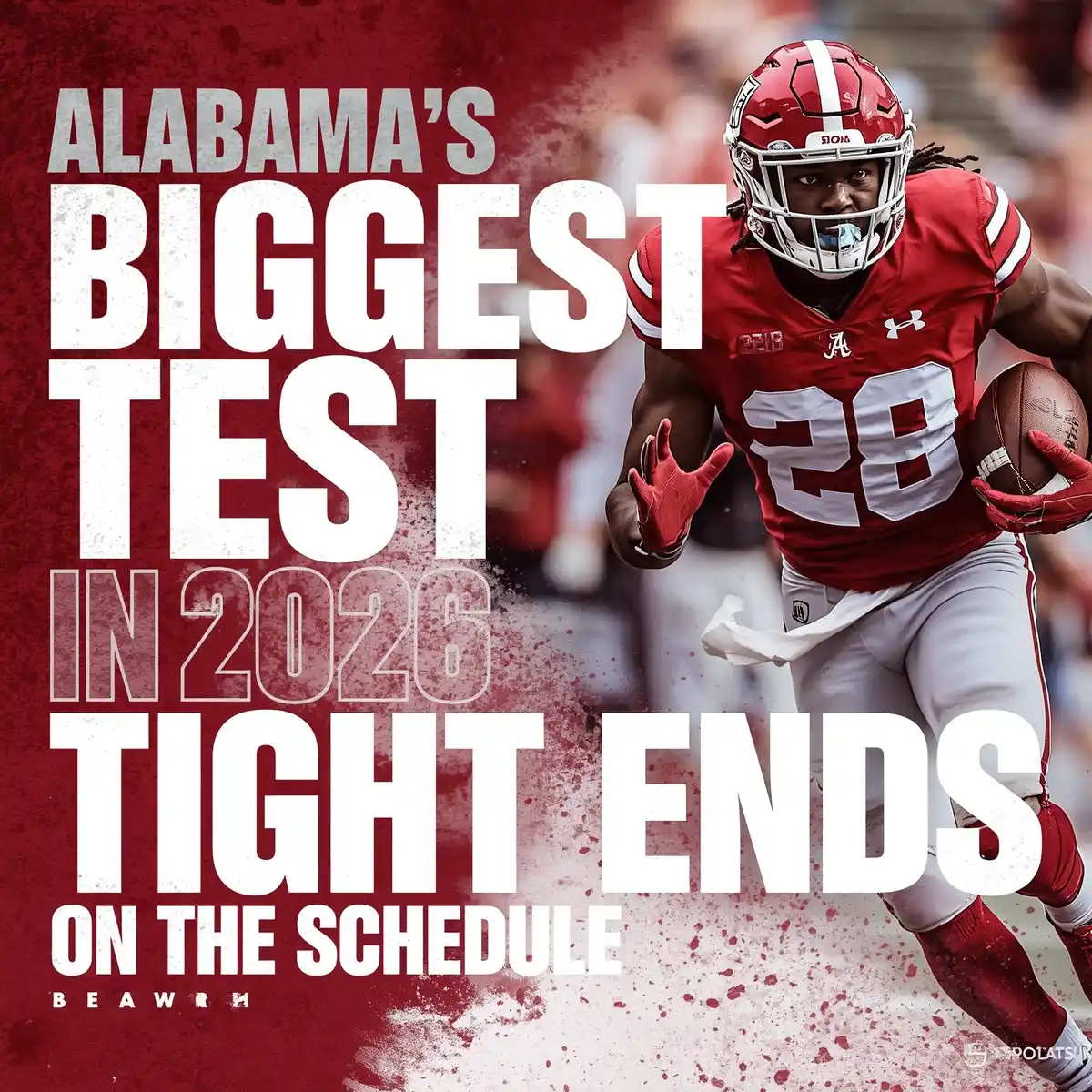
The modern college football landscape demands defensive versatility. For the Alabama Crimson Tide, navigating the grueling Alabama football 2026 schedule requires more than just stopping standard perimeter wideouts and establishing an authoritative run defense.
As head coach Kalen DeBoer enters his third year at the helm in Tuscaloosa, the defensive unit faces a fascinating, highly technical evolution across SEC football. Winning the line of scrimmage requires neutralizing the most dangerous tactical mismatch weapon in modern football: the hybrid tight end.
Gone are the days when tight ends served strictly as glorified offensive tackles in run-heavy sets. Today, the elite programs across the Southeastern Conference deploy massive, hyper-athletic targets who function as jumbo wide receivers.
They create massive headaches for secondary rotations and coverage structures. When evaluating the upcoming calendar, it becomes clear that the path to the SEC championship game and a top spot in the SEC standings hinges directly on containing these specific playmakers.
The Strategic Landscape of the Alabama Football 2026 Schedule
The structural architecture of the Alabama football 2026 schedule reflects a highly competitive 16-team format. Without divisions, every single conference matchup carries massive weight for SEC rankings and the expanded College Football Playoff field. The lack of standard divisional bubbles means teams face varied defensive challenges every single week.
To survive this weekly gauntlet, Alabama’s safety rotations and linebacker groups must play with high-level communication. Modern offenses intentionally move tight ends across different formations, putting them in motion to exploit slow linebackers or outmuscle smaller cornerbacks. This specific tactical challenge makes these five matchups absolute must-watch games for tape grinders and analysts alike.
Projected Master Matrix: Tight End Profiles Facing Alabama in 2026
The table below utilizes verified, official athletic department parameters to map out the physical profiles and classifications of the top tight ends appearing on Alabama’s regular-season schedule:
| Player | School | Position | Height | Weight | Class |
| Elyiss Williams | Georgia Bulldogs | TE | 6’7″ | 255 lbs | Sophomore |
| Luke Hasz | Arkansas Razorbacks | TE | 6’3″ | 242 lbs | Senior |
| Da’Saahn Brame | Tennessee Volunteers | TE | 6’6″ | 235 lbs | Sophomore |
| Donovan Green | Texas A&M Aggies | TE | 6’4″ | 245 lbs | Redshirt Senior |
| Jaden Reddell | Georgia Bulldogs | TE | 6’4″ | 235 lbs | Redshirt Sophomore |
Deep-Dive Analysis: The 5 Tight Ends Who Will Test the Crimson Tide
Disclaimer: The following selections are based on current roster projections, recruiting evaluations, experience, and expected offensive roles heading into the 2026 NCAA football campaign.
1. Elyiss Williams (Georgia Bulldogs)
When the Georgia Bulldogs travel to Bryant-Denny Stadium for one of the most anticipated games on the Alabama football 2026 schedule, the Crimson Tide defense must account for sophomore standout Elyiss Williams. Earning significant snaps as a young contributor in Athens requires rare physical traits, and Williams possesses a distinct frame.
- Massive Passing Target: Standing 6-foot-7, Williams creates an immediate height advantage against any safety or linebacker in the conference.
- Dual-Purpose Projection: Williams has the size and physical profile to contribute as both a blocker and receiving target within Kirby Smart’s offensive architecture.
- Vertical Seam Threat: His stride length allows him to eat up cushion quickly, turning simple play-action designs into explosive downfield gains.
- Defensive Counter-Strategy: Alabama must use physical press coverage at the line of scrimmage to disrupt his timing, preventing him from getting clean releases into the seam.
2. Luke Hasz (Arkansas Razorbacks)
Arkansas understands how to maximize tight ends within its offensive infrastructure. In senior Luke Hasz, the Razorbacks possess a highly experienced option who has developed into one of Arkansas’ most reliable receiving tight ends over his collegiate career.
- Route Integrity: Hasz excels at settling into the soft spots of zone coverages, providing his quarterback with a highly reliable target under pressure.
- Open-Field Production: He transitions from a receiver to a runner instantly, using excellent balance to pick up yardage after the catch.
- Proven SEC Experience: Hasz has performed well in high-stakes SEC football environments throughout his career, making him a primary target on third downs.
- Defensive Counter-Strategy: The Crimson Tide must deploy physical, disciplined zone defenders who can close quickly and make sure tackles are right at the catch point.
3. Da’Saahn Brame (Tennessee Volunteers)
The Third Saturday in October represents one of the most intense SEC rivalries in college football history. When Alabama visits Neyland Stadium, Tennessee will look to integrate sophomore Da’Saahn Brame within the Volunteers’ high-tempo offense.
System Integration: Brame is expected to become an important part of Tennessee’s offense if he earns significant playing time in their fast-paced system.
Matchup Creation: His combination of speed and size makes him a potential weapon if the Volunteers can isolate him against rotating linebackers in space.
4. Donovan Green (Texas A&M Aggies)
A trip to Kyle Field is always a difficult test on any conference calendar. For Alabama, dealing with redshirt senior Donovan Green adds another layer of complexity to their matchup with the Aggies.
- Physical at the Line: Green brings immense strength and veteran savvy to the line of scrimmage, making him an effective component in balanced offensive sets.
- Catch Radius: He routinely wins contested-catch situations, using his frame to shield defenders away from the ball.
- Clutch Third-Down Production: Green serves as a security blanket for his quarterback, consistently moving the chains in critical situational moments.
- Defensive Counter-Strategy: Alabama’s defensive ends must deliver physical chips at the line of scrimmage to disrupt his route timing before he can release into the secondary.
5. Jaden Reddell (Georgia Bulldogs)
The fact that Georgia places a second tight end on this list shows just how deep and talented the Bulldogs’ roster truly is. Reddell is regarded as one of Georgia’s promising young tight end prospects who provides unique rotational flexibility.
- Athletic Profile: Reddell runs routes with the smoothness of a standard wide receiver, making him a difficult matchup for traditional linebackers to mirror.
- Pre-Snap Versatility: Georgia’s coaching staff can move him around the formation to identify and isolate specific coverage weaknesses.
- Explosive Potential: He excels at picking up major yardage after the catch, turning simple short passes into critical first downs.
The Schematic Mismatch: Why Tight Ends Exploit Modern SEC Defenses
The rise of high-scoring, wide-open offenses in NCAA football has forced defensive coordinators to prioritize smaller, faster personnel to cover the perimeter. While this speed helps defend wide receivers, it leaves defenses vulnerable to teams that can field giant, athletic tight ends.
Modern play-callers exploit this personnel dilemma by using play-action passing schemes. By faking a run play, they draw linebackers forward, creating a massive void in the secondary that a fast tight end can easily exploit for a major gain.
Historical Case Studies: Alabama’s Defensive Adjustments in SEC History
Slowing down elite tight ends has historically been a critical benchmark for Alabama teams gunning for the SEC championship game and a high ranking in the final SEC standings. Looking back at specific historical milestones offers a perfect window into this structural challenge.
A prime example occurred during the 2020 SEC Championship Game, when Alabama faced Florida’s consensus All-American tight end Kyle Pitts. Pitts caught 7 passes for 129 yards and a touchdown, thoroughly testing the Crimson Tide’s safety rotations and defensive communication in a high-scoring 52-46 Alabama victory. This matchup demonstrated that elite tight ends can produce numbers even against eventual national champions.
Similarly, matchups against physical weapons like OJ Howard (within Alabama’s own historic practices) and Arkansas’ Hunter Henry in past SEC rivalries forced defensive coordinators to shift away from heavy, traditional linebackers toward highly agile, hybrid safeties.
As the 2026 campaign approaches, Kalen DeBoer’s staff must lean on these exact developmental benchmarks to prevent big plays down the middle of the field.
Managing the Pipeline: How Kalen DeBoer and SEC Coaches Adapt
Roster management in modern college football requires continuous adaptation through the transfer portal and high school recruiting. SEC coaches understand that missing out on elite tight end prospects can set an offense back significantly.
As the Crimson Tide fight for a spot at the top of the SEC standings, their success will depend on their ability to both recruit elite talent and execute sound defensive game plans. Slowing down the premier tight ends on the Alabama football 2026 schedule will be a difficult challenge, but it is one this program must meet to stay in the national championship hunt.
Frequently Asked Questions (FAQs)
Why does the Alabama football 2026 schedule present such a unique challenge at the tight end position?
The lack of divisions in the expanded 16-team SEC format means Alabama faces a more varied schedule, matching them up against diverse offensive structures and elite hybrid tight ends from multiple programs.
What makes Georgia’s Elyiss Williams a notable threat on the schedule?
Standing 6-foot-7 and weighing 255 pounds according to official roster data, Williams combines elite height with unique physical traits, making him a major red-zone target.
How do modern SEC defenses counter hybrid tight ends?
Defenses increasingly deploy hybrid safeties or athletic “star” nickel cornerbacks who possess the speed to run down the seam but maintain the physicality required to tackle larger targets.
Conclusion
The Alabama football 2026 schedule features a gauntlet of highly competitive matchups, but none will test the technical discipline of the Crimson Tide defense quite like the conference’s elite tight ends. Slowing down these versatile playmakers will require a combination of physical play at the line of scrimmage, disciplined zone coverage, and outstanding communication across the secondary.
If Alabama can successfully neutralize these mismatch weapons, they will be well-positioned to climb the SEC rankings, challenge for a conference title, and secure a prominent seed in the College Football Playoff.

Clint Lamb is an Alabama football analyst and college football writer with more than a decade of experience covering the
-
Alabama Crimson Tide Official Athletics Site: RollTide.com – 2026 Football Roster, Schedule Releases, and Depth Charts
-
Georgia Bulldogs Official Athletics Site: GeorgiaDogs.com – Tight End Personnel Profiles and Official Roster Metrics
-
Arkansas Razorbacks Official Athletics Site: ArkansasRazorbacks.com – Luke Hasz Career Bio and Statistical Archive
-
Tennessee Volunteers Official Athletics Site: UTSports.com – Football Roster and Offensive Personnel Portals
-
Texas A&M Aggies Official Athletics Site: 12thMan.com – Donovan Green Profile and Team Roster Records
-
Southeastern Conference (SEC) Media Portal: SECSports.com – Historical Standings and Championship Archives
Related articles
Auburn Recruiting History: How the Tigers Built a Winner

Alabama Pro Bowl Players: History, Position Analysis, and NFL Impact
Alabama Defensive Legends: Complete History, Stats, and Era Profiles
Alabama’s Bray Hubbard Shuts Down White Helmet Rumor
Alabama Wide Receivers in NFL: Complete Player Guide, Draft History, and Career Stats