Home / Auburn Tigers / Auburn vs Alabama Complete History: Inside College Football’s Fiercest Rivalry, the Iron Bowl
Auburn vs Alabama Complete History: Inside College Football’s Fiercest Rivalry, the Iron Bowl
No single game captures the identity of a state quite like the Iron Bowl. Auburn vs. Alabama isn’t just a football game—it’s an annual referendum that divides workplaces, families, and dinner tables across the state of Alabama every fall. Understanding the complete history of this rivalry means understanding two of college football’s most successful programs…


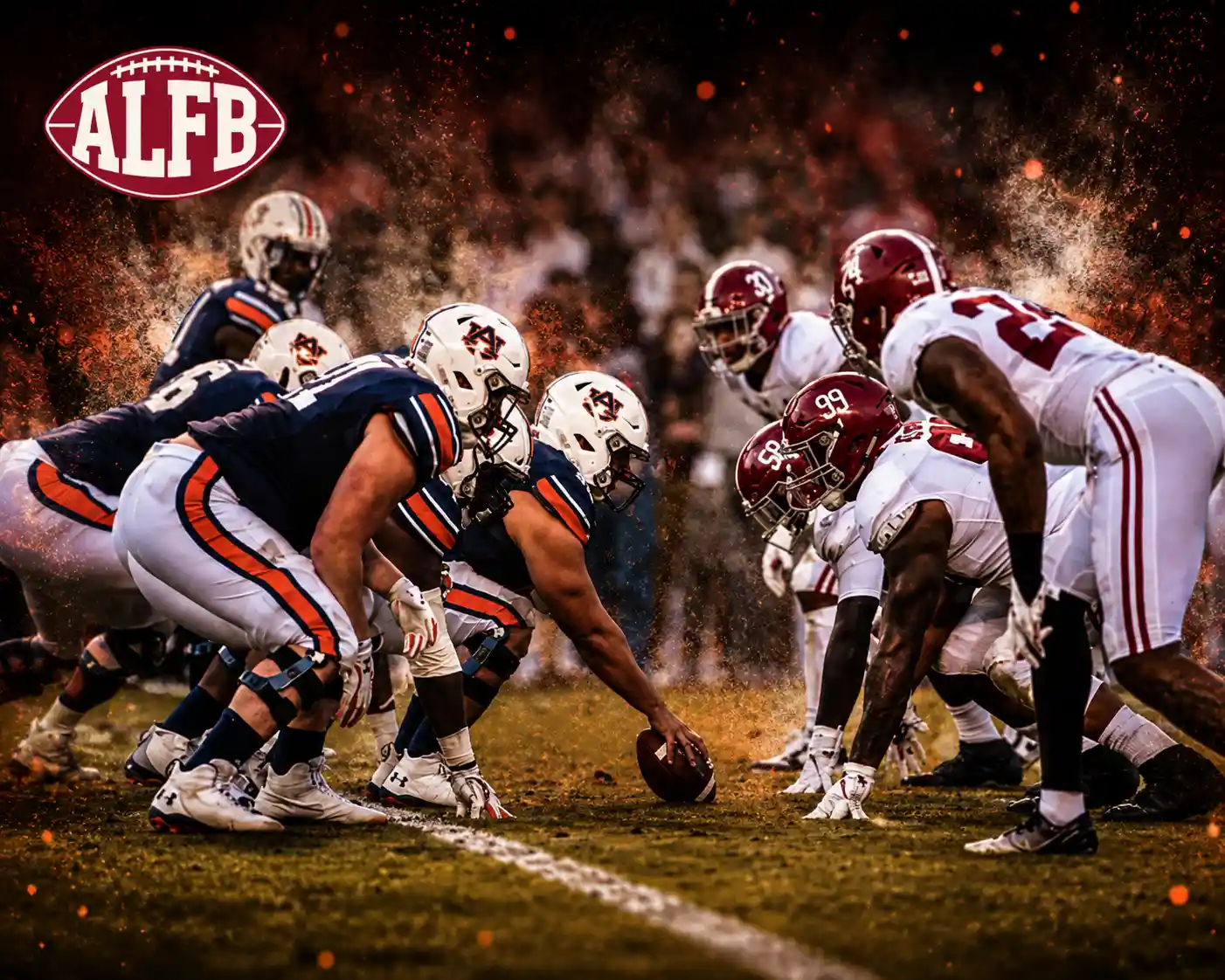
No single game captures the identity of a state quite like the Iron Bowl. Auburn vs. Alabama isn’t just a football game—it’s an annual referendum that divides workplaces, families, and dinner tables across the state of Alabama every fall.
Understanding the complete history of this rivalry means understanding two of college football’s most successful programs and the single Saturday that can define, or derail, either one’s entire season.
This guide walks through the full Auburn vs. Alabama history: the rivalry’s origins, its decades-long hiatus, its modern resurgence, the all-time series record, and the games that have defined the Iron Bowl’s legacy. Whether you bleed orange and blue or crimson and white, here’s the complete story.
Quick Facts Table
| Category | Details |
|---|---|
| Rivalry Name | The Iron Bowl |
| First Meeting | February 22, 1893 (Auburn won, 32-22) |
| All-Time Series Record | Alabama leads 52-37-1 |
| Games Played | 90 (through the 2025 season) |
| Longest Hiatus | 1908-1947 (no games played) |
| Record Since Resumption (1948-present) | Alabama leads 48-30 |
| Current Alabama Head Coach | Kalen DeBoer |
| Current Auburn Head Coach | Alex Golesh |
| Current Winning Streak | Alabama, six straight (2020-2025) |
| Most Common Host Site (Historic) | Legion Field, Birmingham |
| Current Host Sites | Bryant-Denny Stadium (even years), Jordan-Hare Stadium (odd years) |
Origins of the Rivalry: 1893-1907
The Auburn vs. Alabama rivalry dates back further than most fans realize. The two schools first met on February 22, 1893, at Lakeview Park in Birmingham, with Auburn winning 32-22 in front of an estimated crowd of 5,000. The teams played a second game later that same year in Montgomery, and the rivalry continued sporadically through the following decade.
The series went dormant after the 1907 season, and the schools would not meet again for more than four decades. Political tension between the universities, including a public dispute over funding for a proposed School of Mines, contributed to the freeze along with disagreements over game officiating and eligibility rules common to early 20th-century college football.
During the hiatus, both programs developed independently into national powers. Alabama, under Wallace Wade and later Frank Thomas, won national championships in 1925, 1926, 1930, 1934, and 1941.
Auburn, meanwhile, built a regional powerhouse under Mike Donahue, winning Southern Intercollegiate Athletic Association titles in 1913, 1914, and 1919 and going unscored upon for the entire 1914 season.
The Rivalry Resumes: 1948-Present
Public pressure eventually pushed the two schools back to the table. Following conversations between Alabama president John Gallalee and Auburn president Ralph Draughon, the series resumed in 1948 at a neutral site, Legion Field in Birmingham. The teams have played every year since, making 2026 the 79th consecutive season of the renewed rivalry.
The name “Iron Bowl” traces back to Birmingham’s status as a center of iron and steel production in the early 20th century. Auburn coach Ralph “Shug” Jordan is credited with popularizing the term in 1964, telling reporters that missing a bowl game didn’t matter because “we’ve got our bowl game. We have it every year. It’s the Iron Bowl in Birmingham.”
Where the Game Has Been Played
For most of the 20th century, the Iron Bowl was played at a neutral site in Birmingham, with tickets split evenly between the two fan bases. Auburn broke from that tradition in 1989, hosting the game at Jordan-Hare Stadium for the first time.
Since 1993, the teams have alternated hosting duties—Alabama’s Bryant-Denny Stadium in even years and Auburn’s Jordan-Hare Stadium in odd years—ending the Legion Field era for good.
According to the all-time site breakdown, Alabama leads the series when played in Birmingham (34-18-1), while Auburn holds an edge in games played on its home campus (10-8). The two on-campus stadiums have hosted some of the rivalry’s most dramatic finishes in the past two decades.
All-Time Series Record and Historical Eras
Alabama currently leads the all-time Auburn vs. Alabama series 52-37-1 across 90 meetings, a total that includes the 2025 Iron Bowl. Since the series resumed in 1948, Alabama holds a 48-30 advantage. The rivalry has moved through several distinct eras.
The Bear Bryant Era (1958-1982)
Paul “Bear” Bryant’s tenure at Alabama produced the rivalry’s most lopsided stretch. Alabama won nine consecutive Iron Bowls from 1973 through 1981, a run Auburn fans still refer to as the “Reign of Terror.”
Bryant’s 315th career win, a 28-17 victory over Auburn in 1976, made him the winningest coach in major college football history at the time, surpassing the previous record held by Amos Alonzo Stagg.
That nine-game streak makes the “Punt, Bama, Punt” win in 1972 all the more significant in Auburn lore — it was the last Auburn win over Bryant’s Alabama for nearly a decade, and it came against a Crimson Tide team ranked No. 2 in the country.
The streak finally ended in 1982, fittingly in Bryant’s final season as Alabama’s head coach, when freshman Bo Jackson’s fourth-down leap gave Auburn a 23-22 win. Bryant retired at the end of that season, giving the 1982 Iron Bowl added historical weight as the last one he ever coached.
The Tuberville Streak (2002-2007)
Tommy Tuberville authored the longest Auburn winning streak in series history, beating Alabama six consecutive times from 2002 through 2007. That stretch remains a point of pride for Auburn fans and is frequently cited by Tuberville supporters as the signature achievement of his decade on the Plains.
The Saban-Era Iron Bowls (2007-2023)
Nick Saban’s arrival at Alabama in 2007 reset the rivalry’s balance of power. Saban finished 11-8 overall against Auburn, including a 9-5 record specifically while at Alabama.
Despite Alabama’s overall dominance during the Saban era, several of the rivalry’s most iconic games—including the 2010 “Camback” and the 2013 “Kick Six”—came at Auburn’s expense of Saban-coached Alabama teams.
The DeBoer Era (2024-Present)
Kalen DeBoer took over at Alabama in 2024 and has won both of his Iron Bowls to date. His first, a 28-14 win in Tuscaloosa in 2024, extended Alabama’s active winning streak, and his second, a 27-20 win at Jordan-Hare Stadium in 2025, featured a fourth-and-2 conversion that DeBoer himself called a defining gamble of his tenure. Alabama’s win streak now stands at six games entering the 2026 season.
Iron Bowl Game-by-Game: Key Modern Results
| Season | Winner | Score | Location |
|---|---|---|---|
| 2018 | Alabama | 52-21 | Auburn |
| 2019 | Auburn | 48-45 | Auburn |
| 2020 | Alabama | 42-13 | Tuscaloosa |
| 2021 | Alabama | 24-22 (4 OT) | Auburn |
| 2022 | Alabama | 49-27 | Tuscaloosa |
| 2023 | Alabama | 27-24 | Auburn |
| 2024 | Alabama | 28-14 | Tuscaloosa |
| 2025 | Alabama | 27-20 | Auburn |
The 2021 meeting stands as the longest Iron Bowl ever played, going four overtimes before Alabama escaped with a win—a game that also marked the first overtime finish in the series’ history.
Statistical Trends Worth Knowing
A handful of statistical patterns help explain why the Iron Bowl carries such weight nationally, not just locally. The rivalry has produced 24 shutouts across its history, with Alabama responsible for 16 of them.
Neither program has ever finished a season with a losing overall record in the same year as the other, a streak of shared competitive relevance that has held for decades.
Ranked-versus-unranked matchups have overwhelmingly favored the higher-ranked team: dating back to 1955, the higher-ranked team in the series holds a .797 winning percentage. That trend underscores just how unusual results like the 1972 and 2013 games truly are, since both involved a lower-ranked or unranked team upending a heavy favorite.
Historical Context: The Rivalry’s Signature Moments
Punt, Bama, Punt (1972)
Trailing 16-0 in the fourth quarter, Auburn blocked two Alabama punts and returned both for touchdowns, stunning the No. 2-ranked Crimson Tide for a 17-16 win. The game remains one of the most improbable comebacks in rivalry history and gave rise to the phrase “Punt, Bama, Punt,” still chanted by Auburn fans today.
Bo Over the Top (1982)
Freshman running back Bo Jackson leaped over the goal-line pile on fourth down to score the winning touchdown, ending a nine-game Auburn losing streak in the series and announcing Jackson’s arrival as a future Heisman winner.
The Camback (2010)
Trailing 24-0 at halftime in Tuscaloosa, Cam Newton led Auburn to 21 unanswered points and a 28-27 win, the largest comeback in series history. The victory preserved Auburn’s undefeated season and propelled the Tigers to the 2010 BCS National Championship.
The aftermath turned ugly off the field, as an Alabama fan later poisoned the historic oak trees at Toomer’s Corner in Auburn.
The Kick Six (2013)
With the score tied 28-28 and one second remaining, Alabama freshman kicker Adam Griffith lined up for a 57-yard field goal that would have sent the game to overtime. The kick fell short, and Auburn’s Chris Davis fielded it nine yards deep in his own end zone and returned it 109 yards for the winning touchdown as time expired.
Voted the greatest play in college football history in a 2015 fan poll, the Kick Six remains the signature moment of the entire rivalry.
Fourth and 31 (2023)
Facing fourth-and-31 late in the fourth quarter and trailing by four, Alabama quarterback Jalen Milroe connected with Isaiah Bond for a game-tying touchdown in a play that instantly became rivalry lore, helping Alabama escape Jordan-Hare Stadium with a 27-24 win.
Expert Analysis: What Drives the Modern Rivalry
Strengths of Each Program Heading Into the Rivalry’s Next Chapter
Alabama enters the current stretch of the rivalry with clear institutional continuity under Kalen DeBoer, who has now won both of his Iron Bowl starts and tied the school record for wins by a first-year head coach in 2024.
The Crimson Tide’s recruiting and roster depth have generally allowed Alabama to reload even through coaching transitions, a pattern that held true even in DeBoer’s up-and-down debut season.
Auburn’s greatest strength in the rivalry has historically been its ability to produce chaos: three of the last five most dramatic Iron Bowls—the Camback, the Kick Six, and the 48-45 shootout in 2019—were decided by Auburn on the final possession or in the fourth quarter. Even in years when Auburn has been the underdog, Jordan-Hare Stadium has proven to be a genuine equalizer.
Weaknesses and Historical Vulnerabilities
Auburn’s recent struggles in the series are stark: as of the 2025 game, Auburn had lost the last several Iron Bowls, and unranked Auburn teams are 1-29 all-time against ranked Alabama squads, with the lone win coming in 2002.
That imbalance reflects a broader gap in program stability, as Auburn has cycled through five full-time head coaches since Tuberville’s 2008 departure while Alabama has had only three (Saban, DeBoer, and a brief transition period).
Alabama’s clearest historical vulnerability in the rivalry has been road environments at Jordan-Hare Stadium, where Alabama held just a 7-10 record in on-campus games before its 2025 win. Several of the rivalry’s most famous upsets, including the Kick Six, have occurred specifically when Alabama traveled to Auburn as a heavy favorite.
Tactical and Matchup Considerations
Modern Iron Bowls have increasingly been decided by quarterback decision-making in high-leverage moments—DeBoer’s fourth-down gamble in 2025, Milroe’s fourth-and-31 conversion in 2023, and Newton’s fourth-quarter execution in 2010 all fit this pattern.
Auburn’s path back to competitiveness in the series will likely depend on establishing the kind of quarterback stability that defined its most successful Iron Bowl eras under Tuberville, Chizik, and Malzahn.
Frequently Asked Questions
Who leads the all-time series between Auburn and Alabama?
Alabama leads the all-time Iron Bowl series 52-37-1 through 90 meetings, a mark that includes the 2025 Iron Bowl.
Why did Auburn and Alabama stop playing each other for so long?
The series went dormant after the 1907 season due to a mix of political and administrative disputes between the schools and did not resume until 1948.
What is the longest Iron Bowl ever played?
The 2021 Iron Bowl went four overtimes before Alabama won 24-22, making it both the longest Iron Bowl by time played and the first overtime game in series history.
What is the “Kick Six”?
The Kick Six refers to the final play of the 2013 Iron Bowl, when Auburn’s Chris Davis returned a missed 57-yard Alabama field goal 109 yards for a touchdown as time expired, giving Auburn a 34-28 win over the top-ranked Crimson Tide.
Has Auburn ever beaten a ranked Alabama team as an underdog?
Yes, but only once. Unranked Auburn’s win over a ranked Alabama team came in 2002; otherwise, ranked Alabama teams are 29-1 against unranked Auburn squads in the series.
Conclusion
The Auburn vs. Alabama rivalry has evolved dramatically since that first 32-22 Auburn win in 1893—through a four-decade hiatus, a permanent move to campus stadiums, and eras defined by legendary coaches on both sidelines. What hasn’t changed is the game’s capacity to produce moments that outlive the season itself, from Punt Bama Punt to the Kick Six to DeBoer’s fourth-down gamble in 2025. With Alabama holding the recent edge and Auburn entering a new era under Alex Golesh, the next chapter of the Iron Bowl is set up to test whether history’s pendulum is ready to swing back toward the Plains.
Note: This article reflects the most recent publicly available information as of the 2025 Iron Bowl. The all-time series record will update following the 2026 meeting.

Nick Serpa is a contributor at Alabama Football, where he covers the latest news, game analysis, recruiting updates, player stories,
- Iron Bowl — Wikipedia
- Alabama vs. Auburn: Iron Bowl history, scores, notable games — Sports Illustrated
- Alabama clinches spot in SEC Championship Game with win over rival Auburn — CBS Sports
- ‘An ending for the ages’: Punt Bama Punt, 50 years later — Auburn Tigers Official Athletics
- ‘Kick-Six’ to ‘Fourth-and-31’: Memorable Iron Bowls at Jordan-Hare — ESPN
Related articles
Auburn Recruiting History: How the Tigers Built a Winner
Alabama Pro Bowl Players: History, Position Analysis, and NFL Impact
Alabama Defensive Legends: Complete History, Stats, and Era Profiles
Alabama’s Bray Hubbard Shuts Down White Helmet Rumor
Alabama Wide Receivers in NFL: Complete Player Guide, Draft History, and Career Stats