Home / Auburn Tigers / Auburn Football History: The Complete Story of the Tigers, From 1892 to the Golesh Era
Auburn Football History: The Complete Story of the Tigers, From 1892 to the Golesh Era
Few programs in college football carry the weight of tradition quite like Auburn. Auburn football history stretches back to 1892, making the Tigers one of the oldest programs in the sport and one of the cornerstones of Southern football culture. From the War Eagle flight over Jordan-Hare Stadium to the deafening roar of a packed…


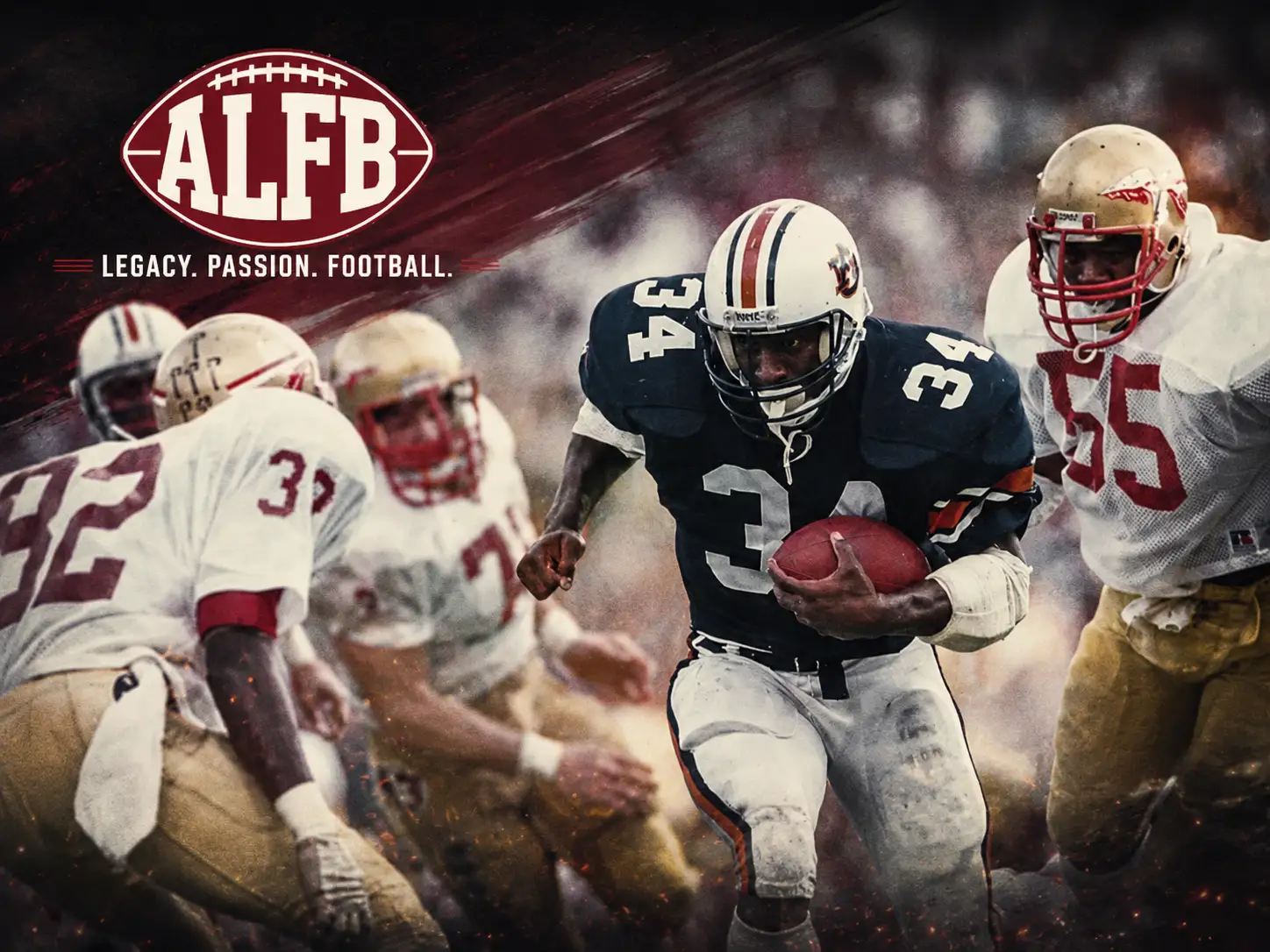
Few programs in college football carry the weight of tradition quite like Auburn. Auburn football history stretches back to 1892, making the Tigers one of the oldest programs in the sport and one of the cornerstones of Southern football culture.
From the War Eagle flight over Jordan-Hare Stadium to the deafening roar of a packed Iron Bowl crowd, Auburn’s story is one of championships, heartbreak, iconic players, and constant reinvention.
This article traces that story from its earliest days on the Plains through the Cam Newton championship run, the “Kick Six,” and into 2026, when Alex Golesh took over as the program’s 33rd head coach. Whether you’re a lifelong fan or just discovering the Auburn Family, this is the definitive look at how the Tigers became one of the sport’s most storied programs.
Quick Facts Table
| Category | Details |
|---|---|
| Founded | 1892 |
| Conference | Southeastern Conference (SEC), member since 1932 |
| Home Stadium | Pat Dye Field at Jordan-Hare Stadium |
| Stadium Capacity | 88,043 |
| Claimed National Championships | 9 (1910, 1913, 1914, 1957, 1958, 1983, 1993, 2004, 2010) |
| Heisman Trophy Winners | 3 — Pat Sullivan (1971), Bo Jackson (1985), Cam Newton (2010) |
| Conference Championships | 16 total (SIAA, Southern Conference, SEC) |
| All-Time Wins | Among the top 15 winningest programs in FBS history |
| Rivalry | Iron Bowl vs. Alabama (annual since 1948) |
| Current Head Coach (2026) | Alex Golesh (33rd head coach in program history) |
The Origins of Auburn Football (1892–1920s)
Auburn officially began playing intercollegiate football in 1892, and the program holds a unique piece of Southern sports history: it played in the first football game ever staged in the Deep South, a matchup against Georgia at Atlanta’s Piedmont Park.
That early game set the tone for what would become one of the region’s defining college football rivalries and helped plant the seeds for Southern football as a whole.
One of the most influential figures in this founding era wasn’t even a Tiger for long by modern coaching standards. John Heisman, the man whose name now adorns college football’s most famous individual award, coached at Auburn from 1895 to 1899.
Decades later, Auburn would become the only school Heisman coached that actually produced a Heisman Trophy winner—a distinction the program still points to with pride.
By the 1910s, Auburn fielded some of its most dominant early teams. Seasons in 1910, 1913, and 1914 are now recognized by various national championship selectors, giving Auburn a share of history from the sport’s earliest decades.
The program later joined the Southeastern Conference in 1932 as one of its charter members, a move that would shape the next century of Auburn football.
The Shug Jordan Era: Building a Powerhouse (1951–1975)
No name is more synonymous with Auburn football’s rise than Ralph “Shug” Jordan. Taking over the program in 1951, Jordan built Auburn into a consistent SEC contender over his 25-year tenure — still the longest of any head coach in school history.
Jordan’s signature achievement came in 1957, when Auburn finished 10-0 and was named national champion by the Associated Press. It marked the first officially recognized national title in program history, cementing Jordan’s legacy and the Tigers’ arrival as a national power. The following season, an undefeated 9-0-1 squad added a share of another national championship recognition.
Under Jordan, Auburn also produced its first Heisman Trophy winner. Quarterback Pat Sullivan led the Tigers to a 9-2 record in 1971 and captured the Heisman after three seasons at the helm during which Auburn went 25-5.
Jordan’s stadium legacy is permanent, too—Jordan-Hare Stadium was named for him in 1973 while he was still coaching, making it the first stadium in the country named after an active head coach.
Pat Dye and the 1980s Resurgence
After Jordan’s retirement, Auburn cycled through several coaches before finding stability again with Pat Dye, who took over in 1981 and served as both head coach and athletics director through 1992. Dye’s Tigers won four SEC championships and compiled a 99-39-4 record, restoring Auburn to championship contention.
The signature moment of this era arrived in 1983. Running back Bo Jackson delivered one of the most famous plays in Iron Bowl history that season, leaping over the goal-line pile to seal a win over Alabama—a moment still remembered simply as “Bo Over the Top.”
That 1983 team finished 11-1, won the SEC, and beat Michigan in the Sugar Bowl, with several national selectors later recognizing Auburn as a national champion for that season, even though the major wire services ultimately ranked the Tigers third.
Two years later, Jackson delivered on the individual stage as well. In 1985, he became Auburn’s second Heisman Trophy winner, rushing for 1,786 yards and 17 touchdowns while cementing his reputation as one of the most electrifying athletes the sport has ever seen.
Jackson finished his Auburn career as the school’s all-time leading rusher and remains a defining figure in program history, later honored with a statue outside Jordan-Hare Stadium.
Dye’s tenure also permanently changed the Iron Bowl. After years of the rivalry being played exclusively at Birmingham’s Legion Field, Dye pushed for Auburn to host the game on campus. Alabama finally played its first true road game in the series at Jordan-Hare in 1989, a shift that reshaped the rivalry for good.
The Tuberville Years and the 2004 Undefeated Season
Tommy Tuberville took over in 1999 and led Auburn through one of its most successful modern stretches. The signature achievement of the Tuberville era came in 2004, when Auburn finished a perfect 13-0 season, won the SEC championship, and still found itself excluded from the BCS National Championship Game behind Oklahoma and USC.
Despite the snub, several national championship selectors have since recognized the 2004 team, and it remains one of the most celebrated undefeated squads in program history.
Tubberville’s Tigers were also known for their dominance in the Iron Bowl, reeling off six consecutive victories over Alabama during his tenure—a stretch fans still refer to fondly given the rivalry’s back-and-forth nature over the decades.
Cam Newton and the 2010 National Championship
If any single season defines modern Auburn football, it’s 2010. Under head coach Gene Chizik, the Tigers went a perfect 14-0, capped by a dramatic comeback win over Alabama in the Iron Bowl after trailing 24-0.
Auburn went on to defeat South Carolina in the SEC Championship Game and then beat Oregon 22-19 in the BCS National Championship Game, giving the program its first fully undisputed national title.
The engine behind that championship run was quarterback Cam Newton, a dual-threat phenomenon who threw for 2,854 yards and 30 touchdowns while adding 1,473 rushing yards and 20 more scores on the ground.
Newton’s dominant season earned him Auburn’s third Heisman Trophy, along with the Walter Camp Award, the Davey O’Brien Award, and the Maxwell Award. His performance remains one of the most complete individual seasons in college football history, and the 2010 team is widely regarded as the gold standard for the modern Auburn program.
The Malzahn Era and the “Kick Six”
Gus Malzahn took over as head coach in 2013 and immediately delivered one of the most memorable seasons—and single plays—in college football history. That year’s Iron Bowl against top-ranked Alabama ended with an Auburn defensive back returning a missed field goal 109 yards for a game-winning touchdown as time expired, a play forever known simply as the “Kick Six”.
Auburn finished the regular season 11-1, upset top-ranked Alabama, and went on to beat Missouri in the SEC Championship Game to claim another conference title before falling to Florida State in the BCS National Championship Game.
Malzahn’s tenure produced consistent competitiveness but no additional national titles, and he was ultimately let go after the 2020 season as Auburn searched for a return to championship-level consistency.
Coaching Turnover and Recent Struggles (2021–2025)
The years following Malzahn’s departure were turbulent by Auburn’s historical standards. Bryan Harsin was hired in 2021 but was fired just eight games into his second season amid friction within the program.
Hugh Freeze took over in 2023, bringing strong recruiting classes and high expectations, including the additions of transfer quarterback Jackson Arnold and wide receiver Eric Singleton Jr. ahead of the 2025 season.
Despite that talent infusion, Freeze’s tenure never produced a winning season. He was fired in November 2025 after a 15-19 overall record and a 6-16 mark in SEC play across three seasons, with defensive coordinator DJ Durkin stepping in as interim head coach for the remainder of the year. It represented Auburn’s most difficult stretch in decades and set the stage for another major coaching change.
The Golesh Era Begins (2026)
In a move announced by athletics director John Cohen, Alex Golesh was named Auburn’s 33rd head coach, arriving after three seasons building South Florida into a bowl-eligible, nationally ranked program. Golesh engineered a rapid turnaround at USF, including the program’s largest single-season improvement in school history in his first year and a return to the AP Top 25 in 2025.
Golesh moved quickly to build his first Auburn staff, retaining defensive coordinator DJ Durkin—whose unit ranked among the SEC’s best in 2025—while bringing in several assistants from his USF staff and reuniting with Auburn alumnus and 2010 national championship contributor Kodi Burns as associate head coach.
Entering the 2026 season, expectations on the Plains are cautiously optimistic as the program looks to restore the standard set during its championship eras. Legendary Players and Hall of Famers
Beyond its three Heisman winners, Auburn’s history is filled with players who left a lasting mark on the program and the sport. The Tigers have produced more than 30 consensus All-Americans, and nine former Auburn players and coaches have been inducted into the College Football Hall of Fame.
A few names stand out as essential chapters in the Auburn story:
- Mike Donahue—The program’s second-winningest coach, Donahue led Auburn’s 1913 team to an undefeated season and a 22-game winning streak that stretched from 1913 to 1915. He was the first Auburn figure inducted into the National Football Hall of Fame.
- Jimmy Hitchcock — A three-way star at quarterback, running back, and punter in the early 1930s, Hitchcock became Auburn’s first two-sport All-American and helped lead the Tigers to the 1932 Southern Conference championship.
- Pat Sullivan and Terry Beasley—This early-1970s passing tandem became one of the most feared combinations in the country, with Beasley still holding Auburn’s career receiving yards record decades later.
- Tracy Rocker — A dominant defensive tackle under Pat Dye, Rocker earned SEC Player of the Year honors in 1988 and remains one of the most decorated defensive linemen in program history.
- Takeo Spikes — A tackling machine at linebacker in the mid-1990s, Spikes remains in Auburn’s all-time top ten in career tackles and was a first-team All-American in 1997.
- Cam Newton — In addition to his Heisman and national title, Newton was named to the 2026 College Football Hall of Fame ballot, a recognition of what many consider the greatest single season by a quarterback in college football history.
Auburn has also officially retired jersey numbers for a small handful of its most impactful players, including Bo Jackson’s No. 34, a rare honor at a program with such a long list of standout performers.
The Iron Bowl: College Football’s Fiercest Rivalry
No discussion of Auburn football history is complete without the Iron Bowl. The annual clash with Alabama is one of the most intense rivalries in American sports, born from decades of shared history, proximity, and championship stakes.
Games have swung entire seasons and national championship races, from Bo Jackson’s leap in 1982 to the 2010 comeback to the 2013 “Kick Six.” The rivalry has been played on Auburn’s campus since 1989 and has become a true home-and-home series since 2000, with each edition carrying weight far beyond a single season’s standings.
Jordan-Hare Stadium: A Living Piece of History
Opened in 1939 as a 7,500-seat venue, Jordan-Hare Stadium has grown into an 88,043-seat fortress that becomes one of Alabama’s largest cities on football Saturdays. Named for coach Shug Jordan and Cliff Hare, a member of Auburn’s first football team, the stadium’s playing surface was later named Pat Dye Field in 2005.
The stadium remains central to Auburn tradition, from the pregame War Eagle flight to Tiger Walk, and a major renovation—the Jordan-Hare North project—is underway to modernize the venue while preserving its capacity and character for future generations of the Auburn Family.
Conclusion
Auburn football history is a story of peaks and valleys—from John Heisman’s early coaching days and Shug Jordan’s championship foundation through Pat Dye’s 1980s resurgence, Cam Newton’s unforgettable 2010 title run, and the stunning theater of the “Kick Six.”
The program has weathered recent turbulence, but its identity remains rooted in the same traditions that have defined it since 1892: a passionate fan base, a stadium that becomes a city on Saturdays, and a rivalry with Alabama that never loses its edge. As Alex Golesh begins a new chapter on the Plains, Auburn’s long and storied history remains the foundation the program continues to build on.
Frequently Asked Questions
How many national championships has Auburn won?
Auburn claims nine national championships, recognized across various national selectors: 1910, 1913, 1914, 1957, 1958, 1983, 1993, 2004, and 2010. The major wire services—the AP and coaches’ polls—have specifically credited Auburn with two of those, in 1957 and 2010.
How many Heisman Trophy winners has Auburn had?
Three: quarterback Pat Sullivan in 1971, running back Bo Jackson in 1985, and quarterback Cam Newton in 2010.
What is Auburn’s biggest rivalry?
Auburn’s biggest rivalry is the Iron Bowl, played annually against Alabama since 1948. It’s considered one of the most significant rivalries in all of college sports.
What is the “Kick Six”?
The “Kick Six” refers to the final play of the 2013 Iron Bowl, when Auburn’s Chris Davis returned a missed Alabama field goal 109 yards for a game-winning touchdown as time expired.
Who is Auburn’s all-time winningest coach?
Ralph “Shug” Jordan holds that distinction, having coached the Tigers from 1951 to 1975 and leading the program to its first officially recognized national championship in 1957.
Who is Auburn’s current head coach entering 2026?
Alex Golesh, hired in November 2025, is Auburn’s 33rd head coach, following a three-season stint building South Florida into a bowl-eligible, nationally ranked program.

Nick Serpa is a contributor at Alabama Football, where he covers the latest news, game analysis, recruiting updates, player stories,
-
- Auburn Tigers Football — Wikipedia
-
- Alex Golesh Named Auburn Football Head Coach — Auburn Tigers Official Athletics Website
-
- Auburn Tigers College Football History, Stats, Records — Sports-Reference.com
-
- List of Auburn Tigers Head Football Coaches — Wikipedia
-
- Football – Heisman Trophy Winners — Auburn Tigers Official Athletics Website
Related articles
Auburn Recruiting History: How the Tigers Built a Winner
Alabama Pro Bowl Players: History, Position Analysis, and NFL Impact
Alabama Defensive Legends: Complete History, Stats, and Era Profiles
Alabama’s Bray Hubbard Shuts Down White Helmet Rumor
Alabama Wide Receivers in NFL: Complete Player Guide, Draft History, and Career Stats