Kalen DeBoer Names Alabama’s No. 1 Issue to Fix in 2026
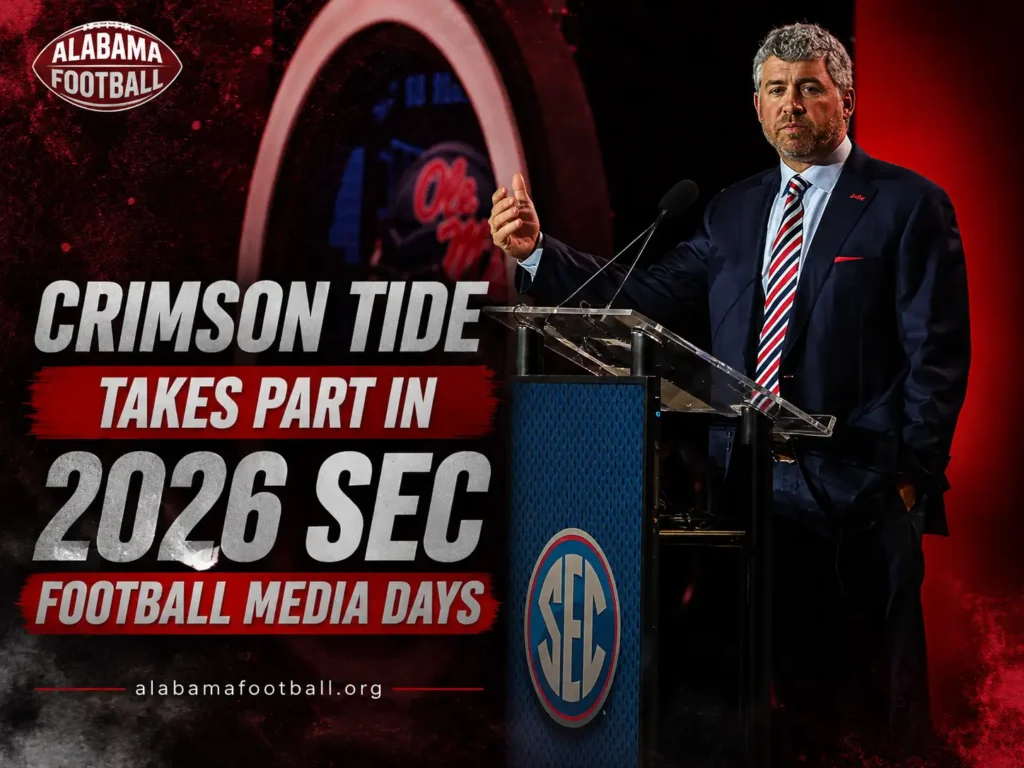
Kalen DeBoer didn’t wait to be asked about it. He took the podium at SEC Media Days on Wednesday and went straight to the issue that has defined his offseason. Alabama has to run the football better in 2026. “We want to be able to run the football better,” DeBoer told reporters. He said the…


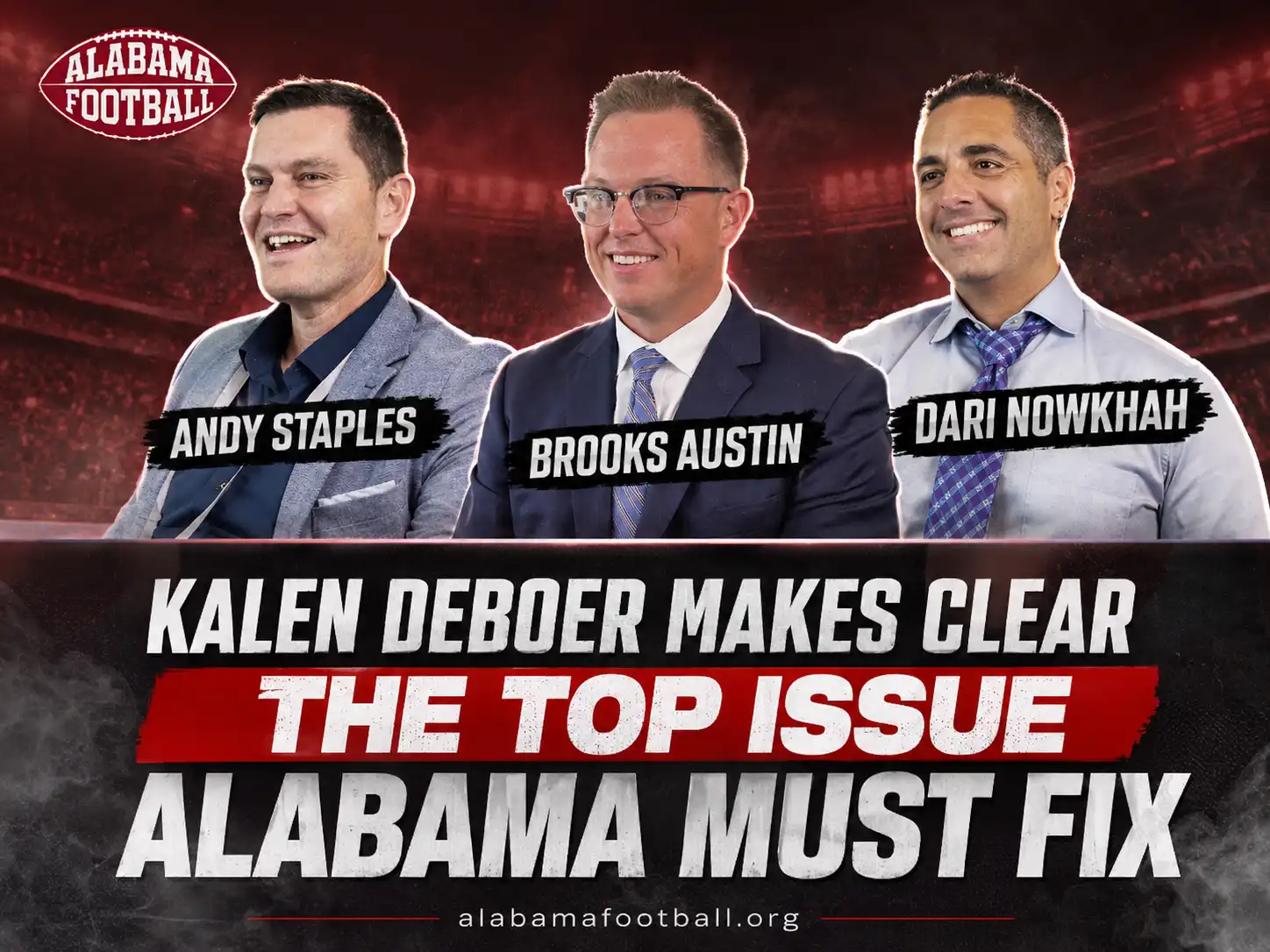
Kalen DeBoer didn’t wait to be asked about it. He took the podium at SEC Media Days on Wednesday and went straight to the issue that has defined his offseason. Alabama has to run the football better in 2026.
“We want to be able to run the football better,” DeBoer told reporters. He said the coaching staff has “addressed and stressed” the issue inside the program all offseason. It’s a simple statement, but it carries weight. Alabama’s ground game ranked among the SEC’s least productive units last year, and it became the central storyline of the Crimson Tide’s playoff exit.
DeBoer has since hired a new offensive line coach, retooled the front, and leaned on a running back room he’s counting on to take a step forward. He’s framing the run game as the foundation for everything else Alabama wants to accomplish this season.
What DeBoer Said at SEC Media Days
DeBoer’s message in Tampa skipped past the quarterback competition between senior Austin Mack and sophomore Keelon Russell. It skipped past playoff expectations too. Instead, he focused on establishing an identity up front. According to CBS Sports, DeBoer said fixing the run game would help the offense “as a whole,” and the coaching staff made it a defined point of emphasis as soon as the season ended.
That framing matters. Alabama has long been associated with physical, downhill football. DeBoer’s comments suggest he views restoring that identity as the prerequisite for everything else the Crimson Tide hope to accomplish in 2026, including a run at the program’s first national championship under his watch.
Reporters also pushed DeBoer on a broader question: how does Alabama get back to the top of college football? His answer centered on consistency rather than a single fix. “We always want to have that expectation that you’re referring to,” DeBoer said, according to Touchdown Alabama Magazine. He acknowledged the program fell short of its own standard last season, even after making progress compared to his first year.
The Numbers Behind Alabama’s Run Game Problem
The statistics explain why DeBoer made this priority No. 1. Alabama’s rushing attack ranked 129th out of 136 FBS teams last season. The Crimson Tide averaged just 92.6 yards per game on the ground, according to Yardbarker. That put Alabama next-to-last in the SEC in rushing offense, per CBS Sports.
The lack of a consistent ground game had a ripple effect. Alabama produced only 42 rushing plays of at least 10 yards last season. CBS Sports reported that mark as the program’s lowest total in more than a decade. Without an established rushing threat, quarterback Ty Simpson absorbed 28 sacks over the course of the season, per Yardbarker. Opposing defenses could sit back and attack a one-dimensional offense.
Why It Matters: An offense that can’t consistently move the chains on the ground puts more pressure on the passing game and the quarterback’s protection. That dynamic followed Alabama into the postseason. It now sits at the top of the program’s offseason checklist, according to DeBoer’s own comments.
The Indiana Game That Changed the Offseason
Alabama’s run-game issues came to a head in the College Football Playoff. The Crimson Tide needed a 17-point rally to beat Oklahoma in the first round, according to Yardbarker. Their deeper postseason hopes fell apart soon after. CBS Sports reported that Indiana dominated Alabama at the line of scrimmage in the next round, exposing a physicality gap the coaching staff could no longer explain away.
That result became the reference point for the entire offseason. Restoring a tougher, more physical presence up front wasn’t one offseason talking point among many. It became, in DeBoer’s own words, something the staff has “stressed” with the team since January.
Big Picture: Alabama’s defense was statistically the stronger side of the ball last season. The unit allowed the 22nd-fewest points per game nationally (20.6 PPG), according to Yardbarker. That gap between a solid defense and a struggling ground game helps explain why DeBoer keyed in on the run game specifically, rather than calling for a broader roster overhaul.
A New Line Coach and a Rebuilt Front
DeBoer’s response to the run-game problem started up front. He hired offensive line coach Adrian Klemm and brought in 11 new offensive linemen, according to CBS Sports. The staff essentially rebuilt the unit from the ground up.
Two established contributors are gone to the NFL. Tackle Kadyn Proctor left as a first-round NFL Draft pick, and center Parker Brailsford went in the fifth round, per CBS Sports. That left Alabama leaning heavily on transfers and internal development to fill out the two-deep.
Who’s Projected to Start Up Front
Coming out of spring practice, the projected starting offensive line featured redshirt freshman Jackson Lloyd at left tackle. Sophomores William Sanders and Michael Carroll rounded out the guard spots. Fourth-year junior Racin Delgatty took over at center, and junior Jayvin James projected at right tackle, according to CBS Sports.
Carroll, an All-America candidate, is the group’s lone returning starter. He’s expected to move inside after playing right tackle in 2025. James arrived via transfer from Mississippi State, and Delgatty transferred in from Cal Poly. Four additional offensive linemen joined through the portal to add depth.
The Coaching Staff’s Bet
DeBoer said he’s hopeful this group can develop chemistry despite its youth. He pointed to the line’s eagerness to be coached as a reason for optimism, according to CBS Sports, even with several first- and second-year players projected to start.
DeBoer’s Diagnosis: Execution and Communication
DeBoer was candid about where the offensive line stands. “We aren’t there yet,” he said, according to CBS Sports. He emphasized execution and communication as the areas the line needs to sharpen most. Players need to trust their assignments and each other’s footwork, he said, and that trust was inconsistent last season because of how many new faces filled the lineup.
DeBoer was similarly direct about what cost Alabama consistency up front in 2025. He cited a lack of continuity between linemen, tight ends and running backs in recognizing and reacting to opposing fronts before the snap, per CBS Sports.
The Running Back Room DeBoer Is Counting On
A rebuilt offensive line only solves half the equation. Alabama’s running back rotation is expected to be led by junior Daniel Hill and redshirt sophomore Kevin Riley. AK Dear and true freshman EJ Crowell are also in line for opportunities, according to CBS Sports. No clear every-down lead back had emerged entering fall camp. That’s part of why DeBoer has spoken about needing more creativity in how the offense uses its backfield.
Analysis: A committee approach can work if the offensive line generates consistent movement. But it puts more pressure on scheme and player development if no back separates himself. Expect Alabama’s coaching staff to be judged on how quickly a clear rotation, or a lead option, emerges once fall camp begins.
Analysis: Why Physicality Is the Real Issue
Reaction to DeBoer’s comments has echoed a consistent theme. According to Yardbarker, one assessment of the program noted that Alabama has a lot of new players on the roster but still has a chance to be good, crediting DeBoer’s work developing the program over his first two seasons.
That take lines up with the statistics. Alabama’s defense was respectable last season, and the roster overall wasn’t devoid of talent. The real issue, as DeBoer has framed it, is physical identity. Alabama needs to win at the line of scrimmage consistently enough to control tempo, protect leads, and take pressure off the passing game. It’s a correctable problem in theory. But it depends heavily on how fast a rebuilt, inexperienced offensive line can jell.
Projection: Alabama’s run-game numbers should improve if the offensive line finds continuity during fall camp, simply based on returning experience at running back and the volume of transfer additions up front. Whether that improvement changes outcomes against the SEC’s best defenses remains an open question DeBoer hasn’t answered yet.
What’s Next: Early Schedule Tests
Alabama opens the 2026 season against East Carolina on Sept. 5. The Crimson Tide then travel to Kentucky for their SEC opener, according to CBS Sports. They host Florida State next, then welcome South Carolina. Kentucky and South Carolina both bring talented defensive fronts. Florida State’s defensive line, led by Mandrell and Darryll Desir, is regarded as one of the more disruptive units in the country, per CBS Sports.
Why It Matters: Establishing control at the line of scrimmage early in that stretch would take pressure off whoever wins Alabama’s starting quarterback job in short-yardage situations, according to CBS Sports’ reporting. It also gives an immediate, public measuring stick for whether DeBoer’s offseason emphasis on the run game has translated onto the field.
Conclusion
Kalen DeBoer didn’t dance around Alabama’s biggest question at SEC Media Days. The run game, and the physicality that comes with it, sits at the top of his offseason priority list. He’s backing that priority with a rebuilt offensive line room, a new position coach, and a running back rotation he’s hoping takes a step forward.
Last season’s numbers make the case clearly: 129th nationally in rushing offense, a next-to-last SEC finish on the ground, and a playoff exit against Indiana that exposed the gap. Whether Alabama has closed that gap will start to show up in September, on a schedule that offers little room to hide.
FAQs
What did Kalen DeBoer say Alabama needs to fix?
DeBoer said Alabama needs to run the football better. He called it something the coaching staff has “addressed and stressed” within the team throughout the offseason, according to CBS Sports.
How bad was Alabama’s run game in 2025?
Alabama ranked 129th out of 136 FBS teams in rushing offense, averaging 92.6 yards per game, according to Yardbarker. The Crimson Tide finished next-to-last in the SEC in rushing yards per game, per CBS Sports.
Who is starting at running back for Alabama in 2026?
The running back rotation is expected to be led by junior Daniel Hill and redshirt sophomore Kevin Riley, with AK Dear and true freshman EJ Crowell also getting opportunities, according to CBS Sports.
Who is Alabama’s new offensive line coach?
DeBoer hired Adrian Klemm as offensive line coach and brought in 11 new offensive linemen as part of an offseason overhaul of the unit, per CBS Sports.
Who is projected to start on Alabama’s offensive line?
Coming out of spring practice, the projected starters were Jackson Lloyd at left tackle, William Sanders and Michael Carroll at guard, Racin Delgatty at center, and Jayvin James at right tackle, according to CBS Sports.
Who is Alabama’s starting quarterback in 2026?
Alabama has an ongoing quarterback competition between senior Austin Mack and sophomore Keelon Russell heading into the 2026 season.
What game exposed Alabama’s run-game issues last season?
Alabama’s physicality issues surfaced in a College Football Playoff loss to Indiana, after the Crimson Tide needed a 17-point rally to beat Oklahoma in the first round, according to Yardbarker and CBS Sports.
When does Alabama open the 2026 season?
Alabama opens the season against East Carolina on Sept. 5, followed by its SEC opener at Kentucky, then home games against Florida State and South Carolina, according to CBS Sports.

Clint Lamb is an Alabama football analyst and college football writer with more than a decade of experience covering the
Related articles
Auburn Recruiting History: How the Tigers Built a Winner
Alabama Pro Bowl Players: History, Position Analysis, and NFL Impact
Alabama Defensive Legends: Complete History, Stats, and Era Profiles
Alabama’s Bray Hubbard Shuts Down White Helmet Rumor
Alabama Wide Receivers in NFL: Complete Player Guide, Draft History, and Career Stats