SEC Football History: The Ultimate Century-Long Legacy
No conference talks about itself quite like the Southeastern Conference does, and for good reason. What started as a breakaway group of 13 schools in a Knoxville hotel in the winter of 1932 has grown into a 16-team league that regularly decides the sport’s biggest questions: who makes the College Football Playoff, who wins the…


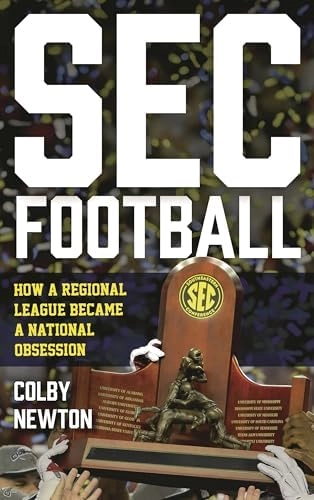
No conference talks about itself quite like the Southeastern Conference does, and for good reason. What started as a breakaway group of 13 schools in a Knoxville hotel in the winter of 1932 has grown into a 16-team league that regularly decides the sport’s biggest questions: who makes the College Football Playoff, who wins the Heisman, and who the sport’s next dynasty will be.
This article walks through that history in order — founding, contraction, expansion, the invention of the conference championship game, and the modern playoff era — using only verifiable facts, with sources checked against multiple outlets.
Where a statistic depends on how you count it (national championships are notoriously inconsistent across polls, eras, and claimed titles), that’s flagged rather than stated as gospel.
How the SEC Was Founded (1932)
The SEC traces its founding to a meeting held December 8–9, 1932, at the Farragut Hotel in Knoxville, Tennessee. Thirteen schools that made up the western and southern wing of the old Southern Conference broke away to form their own league, a split driven largely by disagreements over the size of the Southern Conference and the direction of the sport in the region.
Kentucky’s president, Frank McVey, became the SEC’s first president under the new structure, which — notably for the time — put university presidents rather than athletic directors in charge of conference governance.
The conference didn’t have a permanent headquarters for its first eight years. That changed in 1940, when former Mississippi governor Martin “Mike” Conner was named the SEC’s first commissioner, and the league set up its first offices in Jackson, Mississippi.
The SEC also has a genuine claim to an early piece of college sports history: in 1935, it became the first conference to formally authorize athletic scholarships, a practice the rest of the NCAA wouldn’t widely adopt until the 1950s.
The Original 13 Member Schools
The SEC’s charter members were:
- University of Alabama
- Auburn University
- University of Florida
- University of Georgia
- Georgia Tech
- University of Kentucky
- Louisiana State University (LSU)
- University of Mississippi (Ole Miss)
- Mississippi State University
- University of the South (Sewanee)
- University of Tennessee
- Tulane University
- Vanderbilt University
Ten of those 13 remain in the conference today: Alabama, Auburn, Florida, Georgia, Kentucky, LSU, Ole Miss, Mississippi State, Tennessee, and Vanderbilt.
Shrinking Before Growing: 1940s–1980s
It’s a detail that surprises a lot of fans: for most of its first six decades, the SEC actually got smaller, not bigger. Sewanee, an original member, left in 1940. Georgia Tech and Tulane both departed in the 1960s to pursue independent schedules and, eventually, other conference homes.
That left the SEC at 10 members for more than two decades — a period that included some of the conference’s most storied teams, including Bear Bryant’s Alabama dynasty of the 1960s and 1970s.
The Expansion Era: 1992, 2012, and 2024
The modern SEC took shape in three distinct expansion waves:
1992 — Arkansas and South Carolina. This move brought the conference to 12 members, which under an NCAA rule change enacted in 1987 allowed the SEC to split into two divisions and stage the first conference championship game in major college football.
2012 — Missouri and Texas A&M. This expansion grew the league to 14 teams and pushed both divisions to seven schools apiece.
2024 — Oklahoma and Texas. The most consequential move in decades, this expansion took the SEC to 16 members and effectively ended the traditional East/West divisional format. Divisions were eliminated after the 2023 season; starting with the 2024 championship game, the top two teams in the overall conference standings — regardless of geography — meet for the title.
Beginning with the 2026 season, the SEC also shifted to a nine-game conference schedule with three permanent rivals per team, a change designed to protect historic rivalries while strengthening schedule quality for playoff selection purposes.
Today’s 16 SEC members: Alabama, Arkansas, Auburn, Florida, Georgia, Kentucky, LSU, Mississippi State, Missouri, Oklahoma, Ole Miss, South Carolina, Tennessee, Texas, Texas A&M, and Vanderbilt.
The Birth of the SEC Championship Game
The SEC Championship Game debuted in 1992, becoming the first conference title game in major college football. The first two editions were played at Legion Field in Birmingham; every game since 1994 has been played in Atlanta — first at the Georgia Dome, and at Mercedes-Benz Stadium since 2017.
From 1992 through 2023, the format was simple: the East Division champion played the West Division champion. Since the divisions were dissolved, the game features the top two teams in the final conference standings. Of the 16 current members, 11 have played in the game; only six have ever won it — Florida, Georgia, Tennessee, Alabama, Auburn, and LSU. Alabama holds the record for most appearances, with 16 as of the 2025 game.
The BCS and College Football Playoff Era
This is the stretch that built the SEC’s modern reputation. During the BCS era, an SEC team played in the national championship game every year from 2006 through 2013 — eight straight appearances. Four different SEC programs won BCS titles during that span: Florida (2006, 2008), LSU (2003, 2007), and Alabama, which added multiple championships of its own under Nick Saban.
Since the sport’s championship shifted to the College Football Playoff in 2014, SEC teams have continued to be regular contenders, though the conference’s stranglehold on the actual title has loosened in recent seasons as the Big Ten has won three consecutive CFP national championships (Michigan following the 2023 season, Ohio State following the 2024 season, and Indiana following the 2025 season).
According to a national championship count tracked by outlets covering the sport, SEC programs won 13 national titles across the seasons between 2006 and 2022 — a total unmatched by any other conference over that stretch — with Georgia’s back-to-back championships (2021 and 2022 seasons) standing as the conference’s most recent titles as of this writing.
Iconic Rivalries That Define the Conference
No history of SEC football is complete without its rivalries, several of which are among the oldest in the sport:
| Rivalry | Schools | First Played | Nickname |
|---|---|---|---|
| Iron Bowl | Alabama vs. Auburn | 1893 | The Iron Bowl |
| Deep South’s Oldest Rivalry | Georgia vs. Auburn | 1892 | — |
| Third Saturday in October | Alabama vs. Tennessee | 1901 | — |
| Egg Bowl | Ole Miss vs. Mississippi State | 1901 | The Egg Bowl |
| Florida vs. Georgia | Florida vs. Georgia | 1904 | The World’s Largest Outdoor Cocktail Party |
Georgia and Alabama’s rivalry has taken on outsized importance in the CFP era: the two programs have met in four SEC Championship Games and two national championship games since 2010.
The 2025 Season and the Current Landscape
The 2025 SEC Championship Game — the 34th edition — was played December 6, 2025, at Mercedes-Benz Stadium in Atlanta. No. 2 seed Georgia defeated No. 1 seed Alabama 28–7, avenging a regular-season loss to the Crimson Tide and claiming the Bulldogs’ second consecutive SEC title (and 16th overall) under head coach Kirby Smart. Quarterback Gunner Stockton was named the game’s MVP.
Georgia entered the College Football Playoff as the No. 3 overall seed with a first-round bye. In the quarterfinals — the Allstate Sugar Bowl in New Orleans on January 1, 2026 — the Bulldogs were upset by No. 6 seed Ole Miss, 39–34, ending Georgia’s season. Alabama, which had reached the playoff as the No. 9 seed, also fell in the quarterfinals, losing to Indiana 38–3 in the Rose Bowl. Ole Miss’s playoff run ended in the semifinals.
The 2025–26 College Football Playoff National Championship was ultimately won by Indiana, which defeated Miami 27–21 on January 19, 2026, at Hard Rock Stadium in Miami Gardens — the Hoosiers’ first national title in program history and the Big Ten’s third consecutive CFP championship.
It marked the second straight season an SEC team failed to win the national title, a stretch worth noting honestly rather than glossing over, even on an SEC-focused page: the conference’s postseason dominance, while historically real, has not been guaranteed in the current playoff era.
Common Mistakes People Make About SEC History
- Assuming the SEC has always had 16 teams. For most of its history, the conference had 10 to 14 members; 16 is a very recent development (2024).
- Confusing the SEC’s founding date with its first championship game. The conference was founded in 1932; the championship game didn’t exist until 60 years later, in 1992.
- Treating “national championships” as a single, agreed-upon number. Pre-BCS titles were often split between AP, Coaches, and other polls, and some championships claimed by schools predate their SEC membership entirely (Texas, Oklahoma, Texas A&M, and Arkansas all won titles before joining the conference).
- Assuming SEC teams currently hold the national championship. As of the 2025–26 season, the Big Ten’s Indiana Hoosiers are the reigning national champions.
FAQs
When was the SEC founded? The SEC was founded December 8–9, 1932, in Knoxville, Tennessee, when 13 schools broke away from the Southern Conference.
How many teams are in the SEC? The SEC currently has 16 member schools, following the 2024 addition of Oklahoma and Texas.
When did the SEC Championship Game start? The SEC Championship Game began in 1992, making it the first conference championship game in major college football.
Who won the 2025 SEC Championship? Georgia defeated Alabama 28–7 on December 6, 2025, to win its second straight SEC title.
Did an SEC team win the 2025–26 national championship? No. Indiana defeated Miami 27–21 to win the 2025–26 College Football Playoff National Championship. Georgia and Alabama, the SEC’s top playoff representatives, were both eliminated in the quarterfinals.
Which SEC teams have won the most championship games? Alabama has the most SEC Championship Game appearances (16). Only six schools have ever won it: Florida, Georgia, Tennessee, Alabama, Auburn, and LSU.
Authority & Research Sources
This article is based on verified historical records and official college football resources. Information has been cross-checked using conference publications, NCAA records, university archives, and trusted historical databases, including:
– Official SEC Athletics Website (SECSports.com)
– NCAA Records & Statistics
– Sports-Reference College Football
– The Paul W. Bryant Museum
– College Football Hall of Fame
– National Football Foundation (NFF)
– Official University Athletic Record Books
Conclusion
The SEC’s history isn’t a straight line of uninterrupted dominance — it’s a story of contraction before expansion, of a conference that spent decades at 10 teams before three separate growth waves brought it to 16, and of a championship game format invented in 1992 that reshaped how the entire sport crowns its champion.
The recent playoff era has been kinder to other conferences than SEC marketing might suggest, and an honest account of the league’s history should say so plainly. That combination of genuine tradition and current, verifiable context is what separates a durable piece of SEC content from a recycled one.

Clint Lamb is an Alabama football analyst and college football writer with more than a decade of experience covering the
Authority Source :
-
- Official SEC Sports Registry: SEC Digital Network (secsports.com)
-
- College Football Historical Databases: Sports-Reference College Football Database
-
- Historical Vaults: The Paul W. Bryant Museum Official Archives
Related articles
Auburn Recruiting History: How the Tigers Built a Winner

Alabama Pro Bowl Players: History, Position Analysis, and NFL Impact
Alabama Defensive Legends: Complete History, Stats, and Era Profiles
Alabama’s Bray Hubbard Shuts Down White Helmet Rumor
Alabama Wide Receivers in NFL: Complete Player Guide, Draft History, and Career Stats