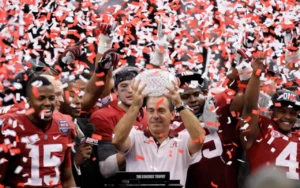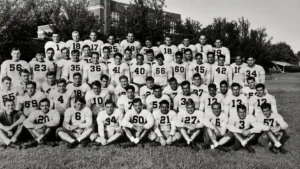
Sustaining a championship culture demands extraordinary organization. Programs must emphasize high-level player retention and world-class tactical intelligence. At the University of Alabama, historical dominance shapes expectations. Specifically, these standards define Saban Field at Bryant-Denny Stadium. Therefore, the coaching roster directly dictates the long-term competitive ceiling of the entire program.
Consequently, head coach Kalen DeBoer built a highly versatile staff for his third full campaign. This staff features an intentional mix of trusted tactical minds from his West Coast stops. Additionally, it includes elite Southern recruiters who understand the regional high school landscape. As a result, this group is ready to dominate the physical demands of the Southeastern Conference (SEC).
This analysis provides an exhaustive breakdown of the official Alabama Football Coaches roster. Below, we detail schematic identities, professional hierarchies, and the personnel driving position growth ahead of the 2026 season.
Head Coach: The Architecture of Kalen DeBoer
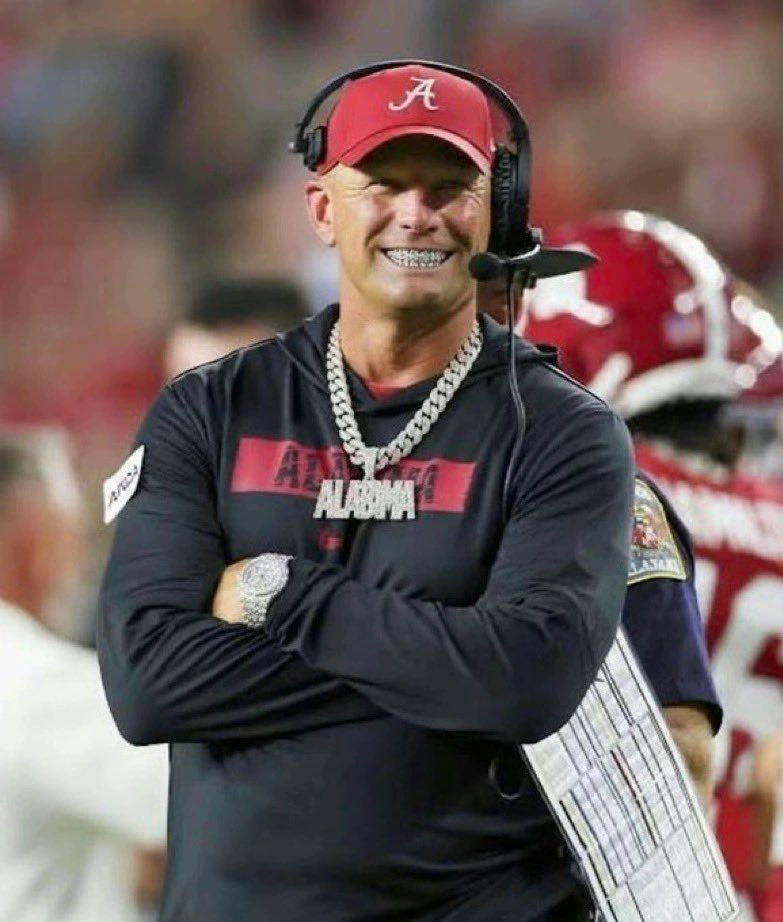
The ultimate responsibility for sustaining the program’s championship foundation falls onto head coach Kalen DeBoer. Arriving with a historic record of program rehabilitation, DeBoer brought a systematic, collaborative operational model to the Mal M. Moore Athletic Facility.
Leadership Philosophies & Program Management
First and foremost, DeBoer’s underlying approach emphasizes high-level mechanical precision, organizational integrity, and structured character development. Thus, instead of relying on top-down administrative pressure, his system builds deep internal alignment. This unity connects players, coordinators, and the support staff seamlessly.
Throughout his 28 years within the profession, DeBoer sustained a remarkable trajectory across multiple divisions. For example, he recorded a dominant 124-20 career head coaching record. Furthermore, his analytical acumen shows in his exceptional performances against elite competition. He has accumulated an impressive 20-6 record against top-25 opponents over his combined stops at Fresno State, Washington, and Alabama.
During his sophomore campaign in Tuscaloosa, DeBoer guided the Crimson Tide to a highly competitive 9-4 record. This run was highlighted by an iconic 41-34 victory over eventual conference champion Georgia. Ultimately, it secured a return trip to the newly expanded 12-team College Football Playoff field.
The Financial Runway and Institutional Backing
Meanwhile, the university administration recognized the stability required to retain high-end staff and outpace elite rivals. As a result, the University of Alabama formally committed to DeBoer with a massive contract extension. The seven-year agreement is worth approximately $87.5 million. Consequently, this contract secures DeBoer through the 2032 calendar year and establishes him among the financial giants of the profession.
Crucially, a structural safeguard within the agreement protects the head coach. The university must cover roughly 90% of the active base value if they dismiss him without defined legal cause. This robust buyout structure sends a powerful message of institutional backing to high school recruits, transfer targets, and competing assistants. Ultimately, it ensures long-term systemic stability in Tuscaloosa.
Offensive Command: Coordinator & Position Leadership
Alabama’s offensive system stretches modern defenses vertically and horizontally. To achieve this, the scheme combines elite perimeter tempo with downhill structural leverage.
Ryan Grubb: Modern Pro-Spread System Design
Offensive coordinator Ryan Grubb directs the engine behind Alabama’s high-velocity attack. Over the years, Grubb has built an elite national reputation. He manipulates defensive secondary coverages using creative pre-snap motion, varied alignment spacing, and devastating play-action design.
However, unlike traditional spread offenses that sacrifice physical run leverage, Grubb’s philosophy values interior line strain. Consequently, the system forces opposing safeties to drop down into tight box spaces to assist with physical run counters. This structural shift instantly opens up massive deep-seam vertical passing lanes for explosive playmakers.
Bryan Ellis & Adrian Klemm: Quarterback Development and Trenches Anchor
- Bryan Ellis (Quarterbacks Coach): Working under the direct guidance of Grubb, quarterbacks coach Bryan Ellis handles the daily mechanical development of the signal-callers. Specifically, Ellis focuses on processing speed, pocket leverage, and ball velocity. Therefore, he plays a fundamental role in managing the active quarterback competition between Austin Mack and Keelon Russell.
- Adrian Klemm (Offensive Line Coach): Physical front lines remain the clear foundation of championship execution in the SEC. Offensive line coach Adrian Klemm handles this group. Notably, Klemm brings three Super Bowl rings as an NFL player. He is currently rebuilding a physical, cohesive wall. His coaching relies on continuous double-team manipulation and leverage concepts, ensuring underclassmen add necessary functional mass.
Skill Position Directors: Robert Gillespie, Derrick Nix, and Richard Owens
Meanwhile, highly experienced developers supervise the perimeter and backfield skill groups. These coaches hold deep historical ties to the SEC footprint:
- Robert Gillespie (Assistant Head Coach / Running Backs): Gillespie provides a crucial bridge of structural continuity inside the athletic branch. Nationally, experts recognize him as one of the elite backfield trainers in college football. He ensures that the downhill running game preserves its explosive output while demanding elite pass protection metrics.
- Derrick Nix (Wide Receivers Coach): Nix handles the perimeter wide receiver rotation. His teaching focuses heavily on route precision, separating techniques, and blocking downfield in space. This role is critical as he guides elite young playmakers like Ryan Williams and transfer addition Jalijah Rutledge into the system.
- Richard Owens (Tight Ends Coach): Finally, Owens commands a versatile room. His players must function seamlessly as both extended in-line blockers and vertical threats over the middle.
Defensive Infrastructure: The Swarm System Architects
Defensively, Alabama executes an aggressive, multiple-front scheme. This setup generates chaotic backfield disruption while maintaining strict leverage on the back end.
Kane Wommack: Aggressive Defensive System Control
Defensive coordinator Kane Wommack acts as the structural architect behind Alabama’s defensive identity. Wommack implements his trademark “Swarm Defense” system. This scheme relies on multiple front alignments, specialized coverage shells, and elite defensive tracking speed.
Furthermore, Wommack’s defensive philosophy rejects passive packages. Instead, his system uses creative blitz angles from second-level players to speed up the opposing quarterback’s processing clock. This pressure forces quick, contested throws and immediate turnovers. Wommack directly oversees the inside linebacker core, ensuring his defensive signal-callers manage front-line run alignments flawlessly.
Maurice Linguist & Jason Jones: Retooling the Crimson Tide Secondary
- Maurice Linguist (Co-Defensive Coordinator / Defensive Backs): Linguist brings immense pedigree as a former collegiate head coach. He handles the critical responsibility of shaping the cornerback positions. Specifically, he emphasizes physical press-man coverage and disciplined eye placement to erase explosive passing plays down the field lines.
- Jason Jones (Defensive Backs Coach): Working alongside Linguist, Jones specializes in managing the safety rotations and nickel packages. He focuses on horizontal range, correct tracking angles, and box run support. Consequently, he transforms young playmakers like Red Morgan into reliable defensive clears.
Front Seven Supervisors: Freddie Roach, Chuck Morrell, and Christian Robinson
Winning inside the trenches requires exceptional coaching consistency. Therefore, Alabama’s defensive front seven relies on highly specialized assistants to control opposing run schemes:
- Freddie Roach (Associate Head Coach / Defensive Line): Roach stands as an indispensable pillar of the program. As a legendary former Crimson Tide linebacker, Roach provides unmatched institutional knowledge. Thus, he stabilizes player retention and dominates the regional recruiting trail. His group focuses on interior gap command and soaking up double-teams.
- Chuck Morrell (Linebackers Coach): Morrell works directly with the edge rushers and linebackers, refining hand placement, rush track speed, and spatial coverage capabilities.
- Christian Robinson (Outside Linebackers Coach): Robinson brings an exceptional developmental record from multiple SEC stops. He trains outside edge defenders to set firm containment lines against perimeter runs.
Special Teams & Roster Logistics Executive Staff
A highly organized football program requires specialized personnel to manage phase-three game operations. Furthermore, these leaders must navigate the fast-paced modern logistical landscape.
Jay Nunez: Phase Three Execution
Special teams coordinator Jay Nunez directs the critical third phase of game day operations. In tight SEC conference battles, field position control, coverage lane integrity, and absolute field-goal consistency decide outcomes. Therefore, Nunez implements disciplined blocking assignments on return units, ensuring explosive playmakers can alter game momentum safely without surrendering devastating penalties.
Courtney Morgan: General Manager & Roster Engineering Hub
In the current era of collegiate athletics, the role of General Manager Courtney Morgan is just as critical to sustained success as on-field coaching. Morgan operates as the administrative architect of the entire roster infrastructure.
Morgan manages the player personnel department, evaluates incoming transfer portal options, coordinates high school recruiting networks, and aligns institutional NIL opportunities. His ability to navigate roster construction allows Kalen DeBoer and the on-field assistants to focus fully on game planning and player development.
Frequently Asked Questions (FAQs)
Who is Alabama’s defensive coordinator for the 2026 season?
Kane Wommack serves as the defensive coordinator, implementing his high-energy “Swarm Defense” philosophy. He is supported by co-defensive coordinator Maurice Linguist, who specializes in defensive back development.
What are the financial contract terms for head coach Kalen DeBoer?
Kalen DeBoer is locked into a seven-year contract extension valued at approximately $87.5 million, securing his leadership through 2032. The contract includes a robust 90% buyout requirement if he is terminated without cause.
Who coaches the offensive line for the Crimson Tide?
Adrian Klemm serves as the offensive line coach. Klemm brings immense pedigree to the position group, having won three Super Bowl rings during his playing career in the NFL.
What is the role of Courtney Morgan within the coaching staff?
Courtney Morgan serves as the program’s General Manager. He oversees the structural evaluation of player personnel, directs transfer portal acquisitions, and coordinates the program’s modern recruiting strategy.
Conclusion & Strategic Outlook
In conclusion, the 2026 Alabama football coaches roster represents a complete, strategically balanced organization. DeBoer designed this framework to navigate the pressures of modern college football. By combining brilliant tactical coordinators like Ryan Grubb and Kane Wommack with foundational anchors like Freddie Roach and Robert Gillespie, he has built an elite leadership structure.
Supported by a historic $87.5 million financial commitment from the university administration and anchored by general manager Courtney Morgan’s structural roster engineering, this staff possesses the administrative and tactical capabilities necessary to maintain Alabama’s championship standards. As the team moves through the demanding schedule, the cohesion and adaptiveness of this coaching group will dictate the program’s long-term future.
Data Sources
The factual milestones, historical coaching records, contract values, and professional hierarchies detailed in this analysis were verified using records from the following sports registries:
Wikipedia (Historical coaching database and programmatic career records)
Official Alabama Athletics (RollTide.com verified coach directories and athletic branch releases)
SEC Sports (Conference administrative records and compliance policies)
NCAA (Official coaching certification and governance tracking guidelines)
ESPN (Broadcast updates and athletic contract tracking reports)
External Authority Source Suggestions
Kalen DeBoer Extension Tracker: Back up the $87.5 Million contract extension data with references to sports business reports from ESPN Coaching Trackers.
Official Coaching Directory & Bio Records: Add an outbound link pointing to the verified RollTide.com Football Coaches Directory to verify personnel assignments.